


A fiberglass mesh drywall tape is the right choice for many joint and crack repairs, but it is not the right choice for every one. This guide is for the buyer or finisher who is choosing a drywall joint tape or a wall crack repair tape for the job in front of them. It explains which tape suits which repair, why width, weight and grid change the result, and what to confirm before ordering. Cement board joints and ceiling applications are not covered here.
Matching The Tape To The Repair
Mesh and paper are both drywall joint tapes, and each suits a different kind of repair.
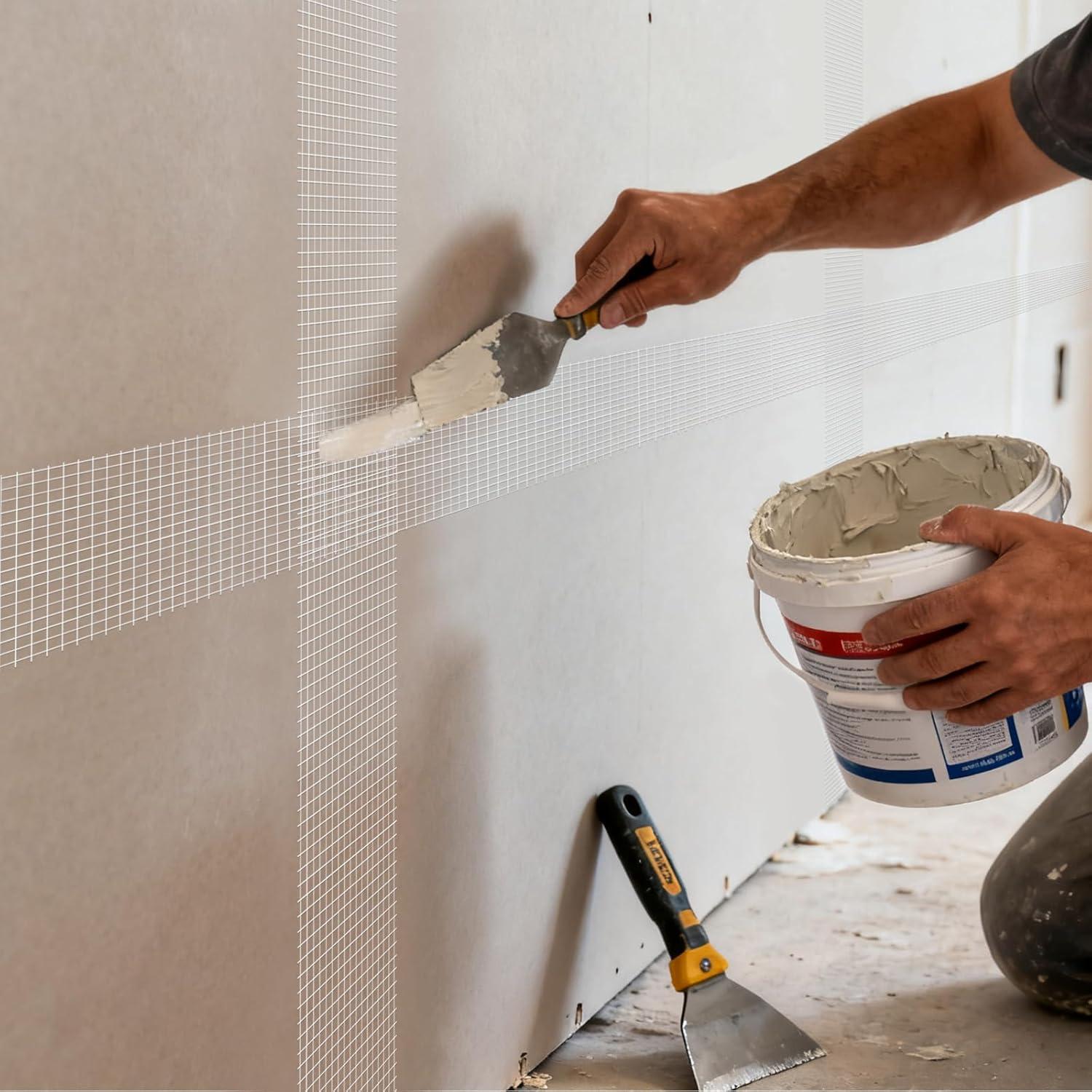
Mesh is self-adhesive, so it is placed on the joint without a bedding layer of compound. That makes it quick for hairline cracks and small patches, where the repair does not carry much load. Paper must be embedded in compound, which takes more time but gives a stiffer, more rigid joint. For butt joints, where two board ends meet and the seam carries the most stress, paper is usually the better choice, and inside corners favor paper too, because its center crease is easier to fold.
For a wall crack repair, the question is how much the crack is likely to move. A stable hairline crack suits mesh. A crack that opens and closes with temperature or building movement needs a tape that can handle that movement, and the crack’s cause should be checked before any tape goes on.
What Mesh And Paper Do Differently
 What Mesh And Paper Do Differently
Mesh is more elastic than paper, so it can stretch with movement, but a flexing joint can crack over time if the compound on top is too weak. Fine Homebuilding recommends covering mesh with setting-type compound, which is stronger than drying-type compound and makes up for the give. USG testing found that paper held up better under compression and shear, while fiberglass mesh did better in expansion at ultimate tensile load. Mesh also resists mold and decay better than paper, which matters in damp rooms.
Mesh does not need embedding, which saves time on each joint. Paper usually leaves a flatter surface at the seam, while mesh can leave a slight hump that needs to be feathered out.
Choosing the Width
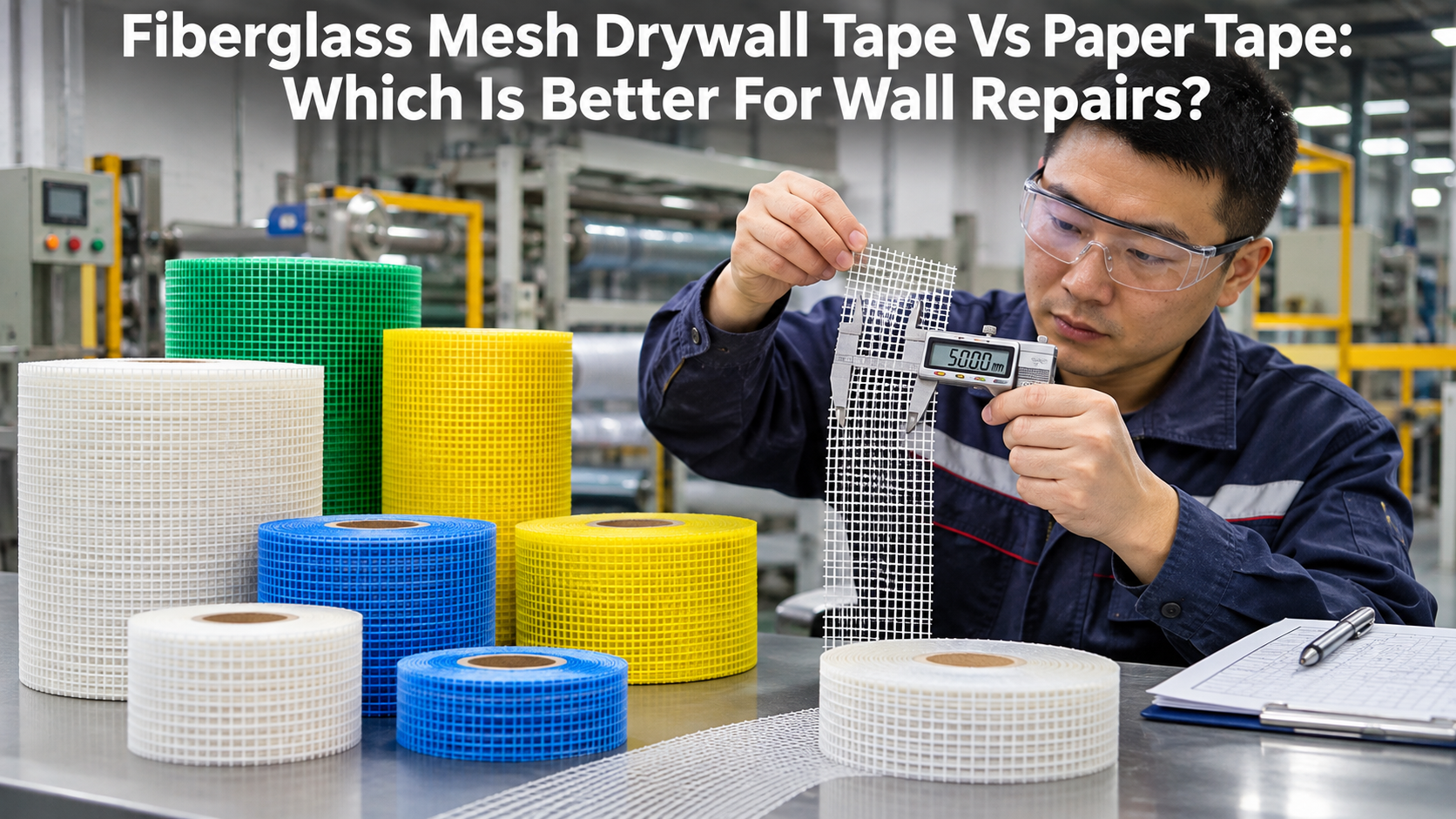 Choose the width that covers the crack or joint
 with a clear margin on each side. The widths available are 2, 4 and 6 inches. Two inches is the usual choice for interior joints and small cracks, because the margin is enough and the seam stays slim. Four inches gives more margin for a wider crack or a joint that needs more coverage. Six inches suits the widest repairs, but confirm with the supplier that it suits the job before ordering.
Choosing The Weight
Weight is available in 65, 75 and 90 g/m². A lighter tape keeps the seam thinner and needs less compound. A heavier tape adds more material and suits repairs where the tape has to carry more load. The company states that weight affects density and durability, but the published material has no test data behind a durability gain, so ask for test results before paying more for heavier tape.
Choosing The Grid Size
Grid options are 2.5, 2.85 and 3 mm. The 2.85 mm grid is the most popular, and grid size makes little difference compared with fiberglass mesh in general. Choose the grid that is stocked in the width and weight you need.
Buying Checklist
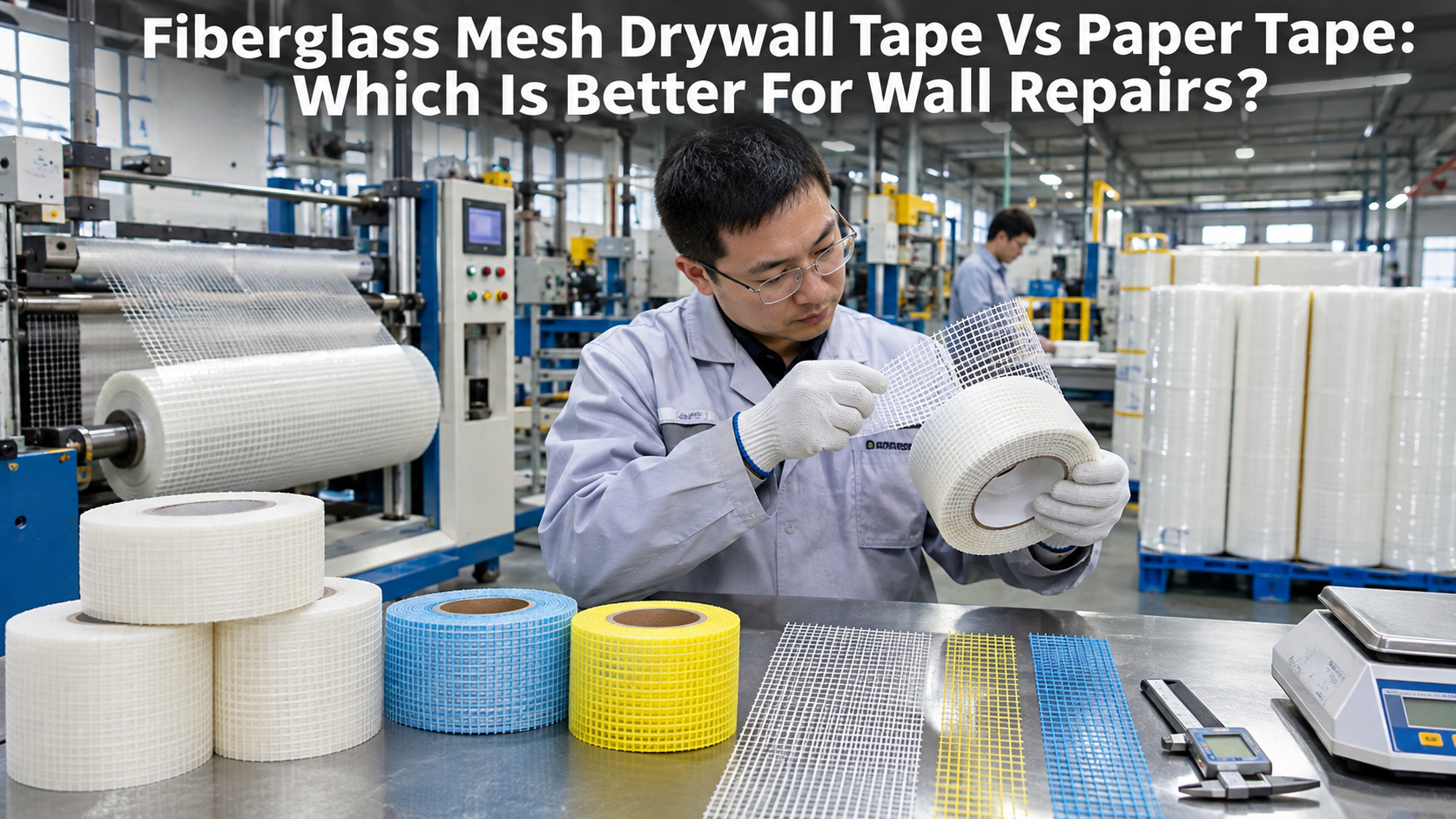 Write each order line as width, weight and grid, so the quote can be checked line by line.
 Request a free sample and test it on your own wall and compound, checking that the tape lies flat, that compound bonds through the openings and that the edges stay down.
ZS Fiberglass makes its own yarn, weaves its own mesh and runs a dedicated mesh tape line. Ask for batch records and the inspection steps for your order, and confirm the minimum order quantity for any custom color, the lead time and the warranty. Compare quotes by cost per finished repair, including compound and waste, rather than price per roll.
FAQs
How Much Tape Do I Need For A Room?
Measure the total length of every joint you plan to cover, add a margin for waste and cut ends, and divide by the roll length. Calculate each width separately, since a 2-inch and a 4-inch line need different rolls.
What Roll Lengths Are Available?
Standard roll lengths are 50 m and 100 m, and custom lengths can be requested. Choose the length that matches your typical job, because a shorter roll wastes less on small repairs.
Can I Put Fiberglass Mesh Drywall Tape Over A Crack That Keeps Coming Back?
Not as a permanent fix. Tape can cover a crack, but a crack that keeps reopening usually means the wall is still moving, so the cause needs checking first. Settle the movement before you repair the surface, because the tape and compound will only fail again if the crack keeps moving underneath them.
Does Mesh Tape Need Priming Before Paint?
Usually yes, but the finish system decides it. Once compound is sanded and dry, a primer or sealer helps the paint film match the repair so that the patch does not show. Check the paint maker’s instructions, since some products call for a specific primer.


