


Fiberglass Fabric and Fiberglass Cloth Specifications
ZS Fiberglass manufactures fiberglass fabric and fiberglass cloth for industrial, construction and composite reinforcement applications. Our product range includes different fabric weights, weave patterns, fiber types and surface coatings to meet varying project requirements.
Fiberglass cloth is valued for its strength, dimensional stability, low weight and compatibility with suitable resin systems. Depending on the application, customers can select plain weave, twill weave, satin weave or multiaxial reinforcement fabrics.
We also offer biaxial fiberglass cloth and customized fabric specifications for suitable applications. Contact our team to discuss material requirements, roll dimensions, technical data and bulk orders.
- CORROSION,HEAT AND WEARRESISTANCE: Fiberglass cloth has very stable chemical property and can stand high temperature and wear.
- LIGHTWEIGHT AND STURDY: Fiberglass cloth is lightweight and has high strength and stiffness,which is easy to carry and qualify more occasions.
- EASY TO PROCESS BUT LEAST EXPENSIVE: Comparing to other composite reinforcement building materials, fiberglass cloth can be processed through cutting, sewing, bonding and so on, which is convenient and fast when applying. But it is the least expensive one.
- LONG LIFESPAN AND COMPATIBLE: It has good durability and is not easily damaged or aged,in order to avoid frequent change and repeating cost. It is compatible with polyester, vinyl ester and epoxy resin
- WARRANTY: We guarantee to provide you 1 year of quality warranty. Supposed you met with any quality issue, please contact us. You are sourcing from a oriented fiberglass fabric supplier. Therefore, you will not have any concern.
Product By Industry Code
Fiberglass cloth has some specific industry code of product that the whole industry can recognize immediately. Knowing these will help save lost of work even you have no idea about the specifications.
All fiberglass cloth is compatible well with polyester, vinyl ester and epoxy resin. However, you need control the ration very well before applying.
 3732 Fiberglass Cloth
- Thickness:0.4
- Weight(g/m2):430
- Width(m):1.0-2.0
- Length(m):50
- Weave:Satin
 3733 Fiberglass Cloth
- Weight(oz./sq. yd): 5.79
- Length(yard): 110
- Weave: Plain weave
- Thread Count: 18 x 18
- Breaking Strength( lb./in): 250 x 225
 3784 Fiberglass Cloth
- Thickness:0.8
- Weight(g/m2):880
- Width(m):1.0-2.0
- Length(m):50
- Weave:Satin
 3786 Fiberglass Cloth
- Thickness:1.3
- Weight(g/m2):1300
- Width(m):1.0-2.0
- Length(m):50
- Weave:Satin
 3788 Fiberglass Cloth
- Thickness:1.7
- Weight(g/m2):1700
- Width(m):1.0-2.0
- Length(m):50
- Weave:Satin
 666 Fiberglass Cloth
- Thickness(mm):0.6
- Weight(g/m2):660
- Width(m):1m, 1.2m, 1.5m
- Length(m):50m, 100m, 500m
- Weave:Satin
 7628 Fiberglass Cloth
- Thickness:0.2
- Weight(g/m2):205
- Width(m):1.0-1.27
- Length(m):100
- Weave:Plain
 1581 Fiberglass Cloth
- Thickness(inch):0.01
- Weight(oz/yd):8.8
- Width(inch):38
- Length(yard):125
- Weave:Satin
 Modified 7725 Fiberglass Cloth
- Thickness(mil): 9.3
- Weight(sq/yd): 8.8 oz
- Width(inch): 38
- Count(warp x fill): 54 x 18
- Perfect for complicated shapes
Product By Alkali Content
According to the content of alkali, fiberglass cloth can be separated into A glass, C glass and E glass, while S glass is one kind of enhanced fabric not only strength, but also elastic. It was not classified by alkali content.
 A Glass Fiberglass Cloth
A glass fiberglass cloth has the content of alkali metal oxides,which is equal to or greater than 15%.Usually it will use broken glass or bottle glass as the drawing materials. Right now, it was prevented to use.
 C Glass Fiberglass Cloth
C glass fiberglass cloth has the content of alkali metal oxides,which is 11.9% -16.4%. Because of its high alkali content, it cannot be used as the electrical insulation material, but it has stable chemical property and good strength.
 E Glass Fiberglass Cloth
E glass fiberglass cloth has the content of alkali metal oxides,which is less than 0.8%. Its chemical stability, electrical insulation performance and strength are all very good. However, it’s somewhat expensive.
 S Glass Fiberglass Cloth
S glass fiberglass cloth has the strength, which is 35% higher than E glass fiberglass cloth and 20% in the elastic modulus, which is 10-20% higher. It can stand the temperature of 800°c, which is the best among these four.
Product By Heating Endurance
Heating endurance is one major property of fiberglass fabric, which was determined by the content of SiO₂. To some extent, the higher content of SiO₂ the fiberglass fabric contains, the higher temperature it will withstand.

Regular fiberglass cloth such as 3732, 3733 and 7628 can stand the consistent temperature of 550°C for half an hour, and the instant temperature of 770°C.
 Medium Silica Cloth (800°C)
Medium silica cloth contains over 70% SiO₂ of the whole weight and it can withstand the temperature of 800°C for 20 mintues and the instant temperature of 1000°C.

High silica cloth contains over 96% SiO₂ of the whole weight and it can endure the temperature of 1200°C for 20 mintues and the instant temperature of 1700°C.
Product By Weight
Fiberglass cloth weights is an important parameter when talking about the fiberglass fabric. It means the weight of every one square meter, which is called GSM shortly. It can affect the density and thickness.
Generally speaking, lightweight cloth is workable to get smooth and transparent surface such as a waterproofing layer, while heavier cloth is more efficient for building thickness and reaching excellent strength and stiffness.
4, 6 and 10 oz fiberglass fabric are the most top 3 regularlly used products.
 4 oz fiberglass cloth
 is thick enough to stop the print of heavy fabrics underneath to showing through. Therefore, it is the most popular choice as a surface fabric. It’s often used for applications where a quick wet-out is needed for example canoe buildiing and final layering over moldless designs.
It’s available in 30″ and 50″ wide and 125yd in roll. But still can be customized.
 6 oz Fiberglass Fabric
6 oz fiberglass cloth such as 3733 was always selected for composite parts and repairs by offering low lightweight and great cosmetics. Meanwhile, it can also deliver uniform strength horizontally and vertically.
It’s available in 38″, 50″ and 60″ wide and 125yd in roll. It is also common used in small craft boat building with the advantage of quickly wet out and transparency.
 10 oz Fiberglass Fabric
10 oz fiberglass cloth is also known as 7500. It was frequently chosen as popular reinforcement for boats, mold building and lay-up by adding layers at 45 degree angles alternately to increase the strength.
It’s available in 38″ and 50″ wide and 125yd in roll. But still can be customized. It is a good option for FRP construction to get enough weight and strength at good price.
Product by Weaving
There are three main weaving methods for fiberglass cloth: plain weave, twill weave, and satin weave. Each one has their own characteristics and are applied in different projections and products.
Different weaving patterns will lead to different strength, durability and appearance.
 Plain Weave Fiberglass Cloth
The characteristics of plain weave fiberglass cloth are even, smooth and soft. But the tensile strength and wear resistance are not good. It’s suitable for making large smooth fiberglass product.
 Twill Fiberglass Cloth
Twill weave fiberglass cloth has good strength and durability, and is suitable for producing fiberglass products that require durability, such as luggage racks and ship shell.
 Satin Weave Fiberglass Cloth
Satin weave fiberglass cloth is the strongest one among plain, twill and satin weave fabrics. At the same time, it performs well to different shapes, especially curved surface.
Fiberglass Fabric by Fiber Orientation
Multiaxial fiberglass fabric is a non curling reinforcing material with multi axial and multi-layered structures. Each layer is sewn together by polyester yarn. It was widely used in wind energy, ship building, fiberglass molds, automotive, aviation and defense industries.
 Unidirectional Fiberglass Cloth
Unidirectional fiberglass cloth has the major weight in the 0 ° direction, and supplemented in the 90 ° direction. The weight range in the 0 ° direction is from 150 to 1200g/m2, while the weight range in the 90 ° direction is from 30 to 80g/m2. The maximum width can reach about 130 inches.
 Fiberglass Biaxial Cloth
Biaxial Fiberglass Cloth is a multiaxial reinforcement fabric with fiberglass layers arranged in two fiber directions and stitched together. It is commonly used in composite manufacturing applications where reinforcement is required along multiple directions.
ZS Fiberglass offers biaxial fiberglass cloth in different weight specifications and fiber orientations, subject to product availability. The appropriate fabric depends on the required strength, laminate design, resin system and manufacturing process.
Contact our team for technical specifications, available fabric weights, roll widths and customized requirements.
 Triaxial Fiberglass Cloth
The regular angle of triaxial fiberglass cloth are 0°/+45°/-45° and +45°/90°/-45°, and the angle can be adjusted freely from +30° to +80 °. The total weight range is from 450g/m2 to 2000g/m2, and the maximum width can reach 101 inches.
Product by Coating
 Silicone Coated Fiberglass Fabric
Silicone coated fiberglass fabric is coated the impregnated fiberglass cloth with advanced silicone rubber through our factory unique process. After finishing this procedure, this silicone coated fiberglass cloth becomes exetremely heat resistant, flame retardant and versatile, which can qualify under kinds of circumstances.
 Aluminized Fiberglass Fabric
Aluminized fiberglass fabric is a versatile material that coated with aluminum foil on one side of fiberglass cloth reflecting the heat, while the cloth itself provides the excellent thermal insulation. Based on these avantanges above, it can be used as good thermal insulation, heat reflection and fireproof protection.
 PU Coated Fiberglass Fabric
PU coated fiberglass fabric is constructed from high-quality E glass filament yarn and coated one side or both sides with our signature Pu coating process. Coating can work at 500℉/ 260°c,while the base works at 1000℉/ 537°c.Infused with aluminum pigments,the noise can be absorbed by 16-35 dB.

PVC coated fiberglass fabric is made of high-quality fiberglass fabric and coated with PVC, offering the characteristics of flame retardant, waterproof and UV resistance. It also improves the property of product surface. It is eco-friendly and an ideal choice for insulation or filtration, and other high-temperature conditions.
 Acrylic Coated Fiberglass Fabric
Acrylic coated fiberglass fabric is made of fiberglass cloth as the base and coated by acrylic. It’s heat resistant and can be cut easily. It can also work under extreme weather conditions. This double coated fabric is an ideal protection for expansion joints and insulation jacket for pipes in various industries.
 Ceramic Fiber Fabric
Ceramic fiber fabric was made from pure alumina-silicate ceramic fiber. It can be weaved with fiberglass yarn or steel wire together to increase the strength. Because of its low thermal conductivity,it’s a good dielectric.It can work at 2300 ℉/1260°c and melts above 3000 ℉/1650°c. So it is widely adopted for fire blankets ,insulation covers and flue ducts.
Product Features


Customize Fiberglass Cloth for Your Business
As a fiberglass cloth manufacturer, we have been providing customization service to our customers for over 10 years including the weight, width, length, label and so on. All your products from Zhongsheng Fiberglass are traceable and certified.
Supposed you have no idea about how to start it quickly, just leave me message or download the TDS underneath this page and follow the parameters in the TDS and share the information accordingly.


200,000 m2 of Daily Output is the Foundation of Timely Shipment
As a fiberglass cloth manufacturer, we can produce 200,0000 m2 of fiberglass fabric every day, which should be the top three supplier in China.
This daily capacity will not only provide our own use, but also satisfy our fabric customers without questions. In China, there are very few suppliers can do so. Good news is that we are still extending our production line to take more orders with the demanding growth abroad.
We are confident to say we can offer you good service with our support too.
Advanced Equipment, Lean Line and Experienced Workers Guarantee Quality
To become a qualified fiberglass cloth manufacturer, in the past 20 years, we attached great importance to the upgrading of machine and equipment every year and the adoption of LEAN LINE.
We also focus on the turn over rate of workshop staff by announcing types of regulations for their benefits and health.
All in all, we did all of these for the sake of stable quality.

Yarns Were Also Produced In House
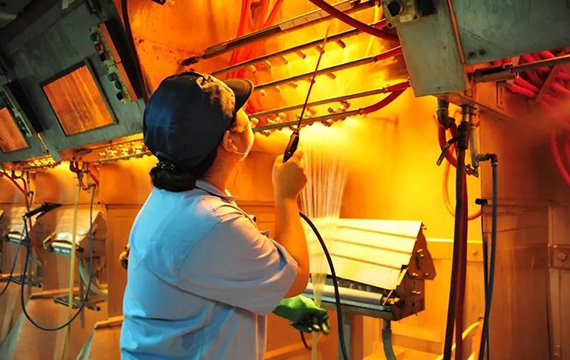

To be more competitive in the fiberglass cloth market, I finished the drawing process from melting ball glass and twisted the yarn inside of factory. After these, we used the most advanced weaving machine to produce the fabric.
Now we have become a fiberglass cloth manufacturer to accomplish the whole process from the raw materials to the final fiberglass cloth, which greatly save cost and time, and improve the efficiency.
More Information About Fiberglass Cloth

Firstly, we sort out the glass ball. When the temperature reaches standard, workers start pouring and melting the ball glass.
Secondly, we conducted the drawing and cold it until ready. After that, we warp on machine, size and weave the yarns.
In the end, comes to the important desizing step and inspection before packing and loading.

Fiberglass cloth has a very wide range of applications such as building and reparing canoe or boats, aero space, molding parts, lay up, structural, construction projections and PCB.
Therefore, you need to be careful to choose the right one in the aspects of weight, weave and length to get good strength, low weight and stiffness. Even sometimes, you need also watch out for the coating to the surface of fabric for great cosmetics.
Application Examples about Fiberglass Cloth for You

As we know, there are different kinds of Fiberglass Cloth for Surfboards. Therefore, choosing the right one will affect the quality and property of surfboards directly.
E glass Fiberglass Cloth has high strength, stable chemical property and good flexibility. Usually it was used to produce the core and surface of surfboards. The regular GSM is 120g/m2.
S glass Fiberglass Cloth has even higher strength and abrasion than E glass, but performs worse in flexibility. It is often to be used for the edges, corners and tail wings. Its GSM is 200g/m2.

To our experience on building boats, fiberglass cloth plus resin is the best solution due to its high strength. However, you still need to apply different fabric materials for different parts of boats.
For example, for the the big smooth area like the body of boats, which has strength requirements, you had better select fiberglass cloth mixed with epoxy resin, while for some small area, which need repeat cutting, for the protection of environment, it’s better to use canvas to replace. But if you need extremely high strength, you even need consider carbon fabric.
Simply speaking, you should not just pick one kind of fiberglass cloth for boats economiclly and functionally。

PCB plays great importance in the economy of country. But its growth counts on the progressing of fiberglass cloth. That’s because the characteristics of heat endurance, dielectric and erosion resistance just meet all the requirement of PCB.
Nowadays the signal rate is increasing again and again, while the weaving method of fiberglass cloth has a significant impact on signal integrity. Therefore, that’s the conflict which researchers are studying and working on. We think fiberglass PCB will continue to contribute to PCB industry in the future.

Fiberglass Welding Blankets are widely used to prevent welding slag from damaging operation table and floors, and wounding operators.
Regularly its working temperature can reach 900 ° C-982 ° C and instant working temperature 1450 ° C -1650 ° C, and can be even higher. To achieve different working temperatures, you need choose different materials such as high silica cloth, medium silica cloth, fiberglass cloth, carbon fiber, ceramic fiber and so on.
Fiberglass Welding Blankets can be applied in ship building, automobile manufacturing, oilfield construction, insulation and isolation tapestry.

If you are an enterprise that use pipes to transfer heat, you should face the heat loss headache, which wastes a lot. Fiberglass Insulation(insulation jacket) resolve this problem from two aspects, in one aspect fiberglass cloth has low heat transfer coefficients and stop the heat releasing, in another aspect it forms the air pocket inside after it was made and installed.
Fiberglass Insulation(insulation jacket) can reduce heat dissipation of valve, flange, steam pipeline, joint and containers that need insulation.

Get The TDS and Download The Catalog
- Technical Data Sheet
- Catalog for Filter Fabric
- Catalog for Aluminium Foil Fabric
- Catalog for Aluminium Foil Fabric
| CHRACTERISTIC | HZ-01(3732) | |
| WEAVE | Broken Twill | |
| SIZE | 1m*100m | |
| THICKNESS | 0.43mm | |
| COST STYLE | No | |
| COLOUR | WHITE | |
| WEIGHT | 430g/m2 ±10 | |
| THREAD COUNT | WARP | 18±1.8percm |
| WEFT | 13±1.3percm | |
| TENSILE STRENGTH MIN | WARP | 700N/5CM |
| WEFT | 400N/5CM | |
| SERVICE TEMPERATURE | -120 °-550 ° | |
Related Product


Frequently Asked Questions
Collect some questions and answers raised by my customers for your reference. It may help you to resolve your problems when lacking of knowledge about the selection about materials or hesitate to pick the right fiberglass cloth manufacturers.
The satin weave fiberglass cloth is the strongest among the satin, plain and twill cloth, and it also conforms better to curved surfaces or unshaped objects.
The weigth per square yard of fiberglass cloth is often an important parameter. Usually it ranges from 2 oz to 40 oz, which also correlates to the thickness of the cloth closely.
Plain weave fiberglass cloth has better stability and flexibility, and easily to be cut but not likely to unraveling. Because the stands inside lie at 90 degree angles to each other.
Satin weave fiberglass cloth has 3-7 warp threads and another floating fill yarn, which stitched one warp underneath. This makes the fabric able to conforms to curved or unshaped objects.
Twill fiberglass cloth uses one warp thread, which lies on top of 2 fill yarns. It combines both the advantage of plain weave and satin weave cloths. But it will loosen easily after cut.
Fiberglass weight per square yard varied according to applications. Usually the weight ranges from 2 oz to 10 oz.
The most popular choice is 4 oz,which is light weight and rapid wet out. It was well received in canoe and kayak building. Meanwhile, it can withstand the daily abuse.
However, for large area, 6 oz to 10 oz fiberglass cloth will work better,especially when the surface of object is smooth and flat without corners and contours.
10 oz above is very difficult to wet out. Therefore, it is not good choice to mix with resin. However,to resolve this problem, you had better use several layers of thin cloth as a replacement.
In a word, before selecting, you should consider the property and and advantage of different weights.
Fiberglass cloth is oriented woven with multiple yarns twister together after drawing, while fiberglass mat is mixed and overlapped randomly with glass fiber, whose length is about 1-2 inches.
Fiberglass mat usually is used to increase the thickness but lack of strength, which is coincidentally the function of fiberglass fabric.
Fiberglass fabric is used for composite reinforcement, boat building, surfboards, industrial insulation and other applications requiring suitable strength and material stability. The right fabric depends on the project requirements.
The terms fiberglass fabric and fiberglass cloth are often used interchangeably for woven fiberglass textile materials. Product specifications such as weight, weave, thickness and fiber orientation help determine the suitable material.
Biaxial fiberglass cloth is a reinforcement fabric with fibers arranged in two directions. It is used in composite applications where multidirectional reinforcement is required.
Fiberglass cloth tape is used for selected reinforcement, insulation and thermal protection applications depending on its construction and coating. Check the product specifications to confirm its suitability for your intended use.
Consider fabric weight, weave pattern, fiber type, orientation, coating, resin compatibility and the required mechanical properties. Consult the product data sheet to compare specifications.
Customization may include fabric weight, width, roll length, weave and coating, depending on manufacturing capabilities. Contact the supplier to confirm available options and minimum order quantities.
Contact ZS Fiberglass to enquire about available biaxial fiberglass cloth specifications, roll dimensions, technical data and bulk order requirements.