A pipe or tank made from fiberglass-reinforced plastic is only as sound as the reinforcement inside its wall. Fiberglass Reinforcement for FRP Pipes decides how the wall carries pressure, how it resists the fluid inside and how it is built. ZS Fiberglass supplies the mat, veil and combo products used in these walls. This guide looks at the structural role of that reinforcement and the decisions a buyer should make before ordering.
Understanding Fiberglass-Reinforced Plastic Pipes And Tanks
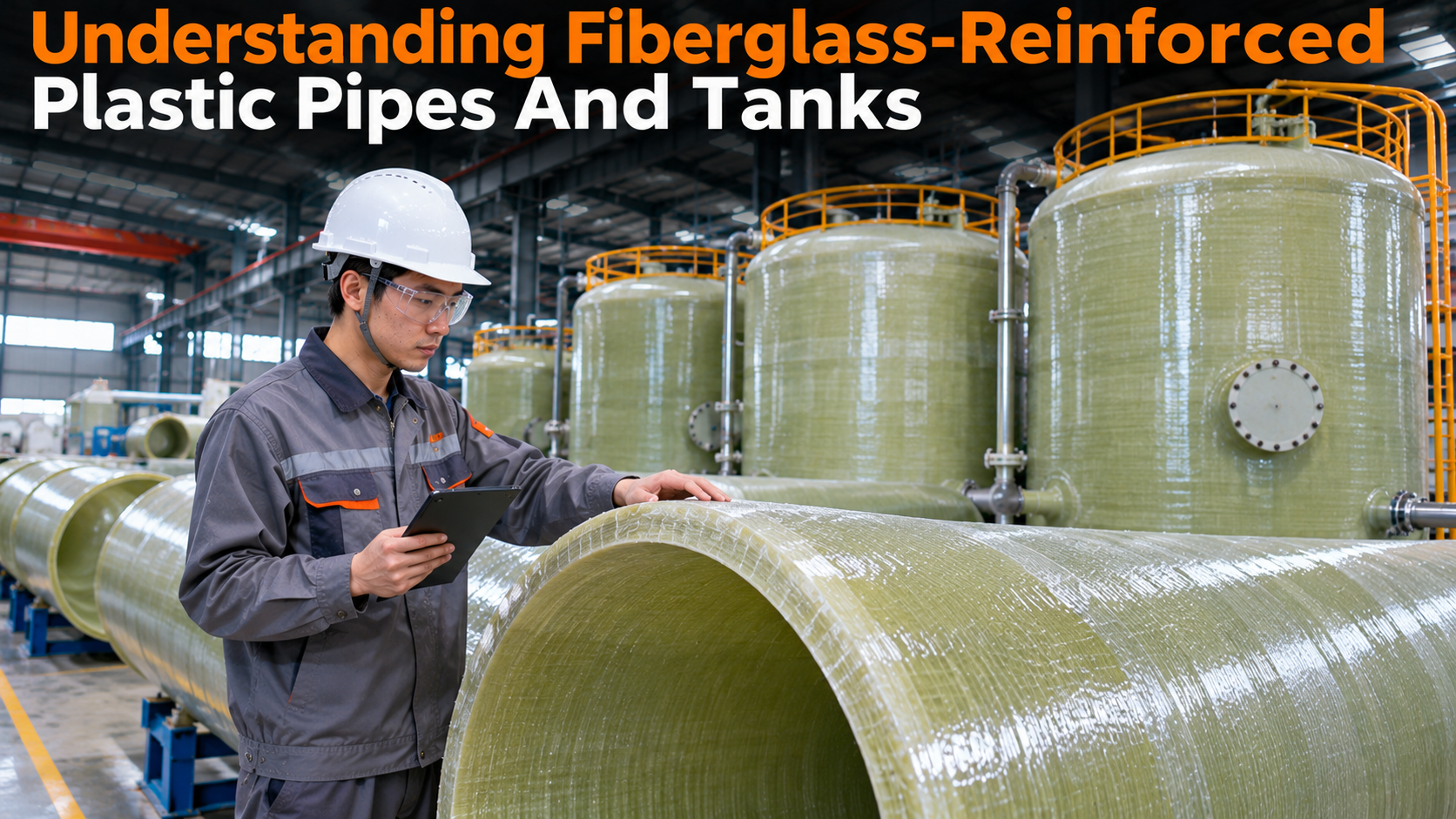 Understanding Fiberglass-Reinforced Plastic Pipes And Tanks
FRP pipes and tanks are laminated walls built from layers of glass and resin. The innermost layer faces the fluid and is resin-rich, the middle layers carry the structural load, and the outer layer protects the wall from weather and handling. Two processes dominate. Filament winding lays continuous rovings at set angles, which suits round pipes and tanks. Hand lay-up builds up mat and fabric layer by layer, which suits fittings, large tanks and repairs. Two standards are commonly referenced for these products, ASTM D2996 for filament-wound pipe and ASTM D3299 for filament-wound corrosion-resistant tanks. Confirm the current editions with the designer before writing them into a specification.
Role Of Fiberglass Reinforcement In Structural Strength
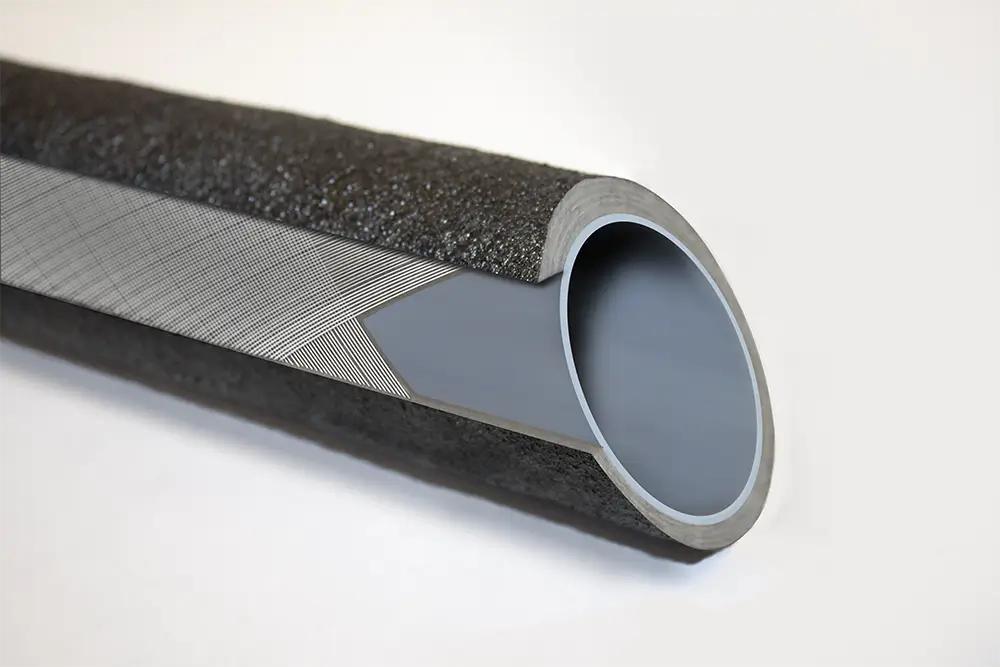 Role Of Fiberglass Reinforcement In Structural Strength
Pressure and weight load the wall, and the glass must carry that load in the directions it acts. Filament-wound rovings handle hoop stress in pipes, while mat and fabric layers handle the remaining loads. Chopped strand mat is made of randomly oriented strands, so it gives similar strength across the plane of the laminate, which suits lay-up where loads are not predictable. The fiber form also affects how damage develops. A 2024 study in Polymer Composites compared chopped strand mat and woven roving composites under cyclic tension and found that they develop damage differently, which matters where pressure pulses or vibration are present. Read such studies as a guide to test design, not as a substitute for the designer’s own load case.
Reinforcement Forms Used In Pipe And Tank Manufacturing
Each layer in an FRP wall has a separate job, so each form is chosen for its role. Fiberglass Reinforcement for FRP Pipes is usually built from the forms below.
| Form | Role In The Wall | Notes |
| Chopped strand mat | Structural build-up in hand lay-up | Emulsion-bound for smoother parts with fewer contours, powder-bound for complex molds |
| Surfacing veil in C-glass or ECR-glass | Resin-rich liner and corrosion barrier | Available from 20 to 80 g/m², with binders matched to polyester, vinyl ester or epoxy |
| Stitched mat | Binder-free reinforcement with open resin flow | Suited to epoxy and closed-mold processes |
| Combo mat | Mat stitched to woven roving | Builds thick structural layers in fewer passes |
| 1708 biaxial mat | ±45° fabric with a stitched mat layer | ECR version is offered for chemical storage tanks |
The veil is the first layer laid against the mold, because it gives the wall its corrosion barrier and a smooth, resin-rich face. Structural layers go on top of it.
Applications In Water Treatment, Chemical Processing And Industrial Storage
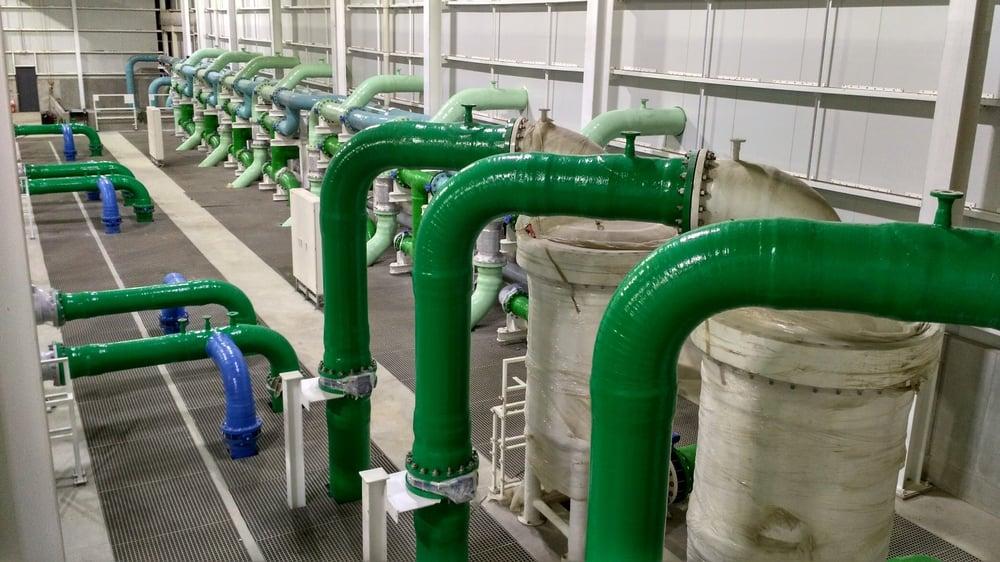 Applications In Water Treatment, Chemical Processing And Industrial Storage
Water treatment vessels, chemical process piping and industrial storage tanks share one demand: the inner liner must survive the fluid. Acid leaching and alkaline attack are the usual failure routes for standard E-glass, so ECR-glass reinforcement is the common choice for aggressive service. In these duties, Fiberglass Reinforcement for FRP Pipes is typically a veil over a chopped strand mat build, with the veil carrying the corrosion barrier and the mat carrying wall thickness. Chopped strand mat is also used to build wall thickness quickly in storage tanks, and it is used for cooling towers and building panels, which shows how widely the same material is applied.
Overview Of Fiberglass Reinforcement In Filament Winding And Composite Fabrication
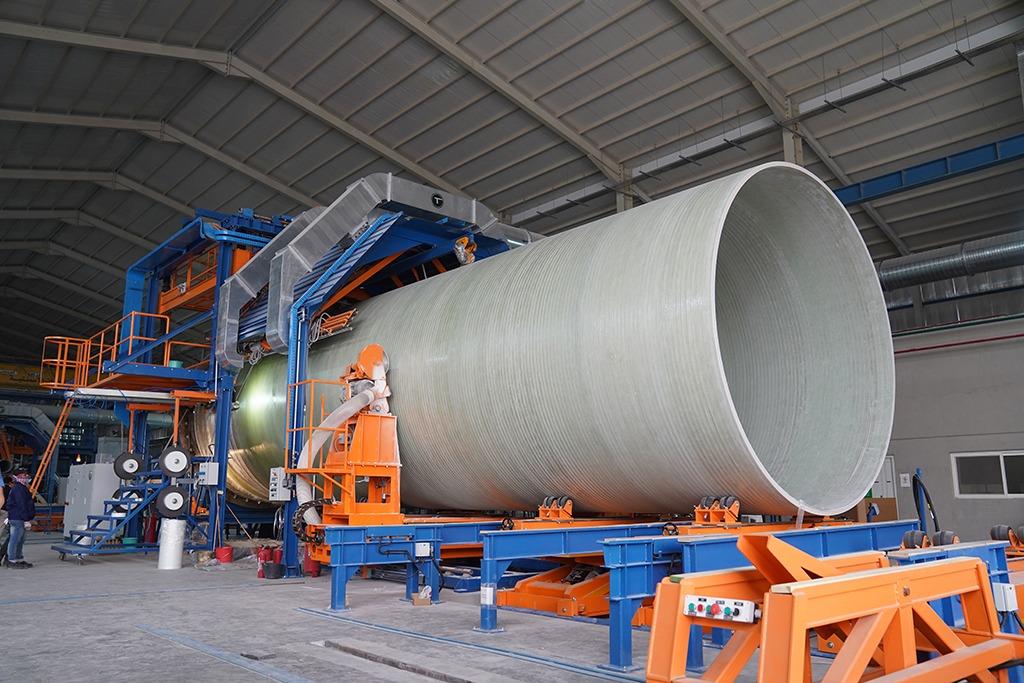 Overview Of Fiberglass Reinforcement In Filament Winding And Composite Fabrication
Filament winding and hand lay-up use different reinforcement feeds. Winding uses continuous rovings, which lay down the hoop and helical fibers that a pipe wall needs. Composite fabrication for tanks and fittings uses mat and cloth wetted out in sequence. Chopped strand mat is described for hand lay-up, filament winding and molding processes, while continuous filament mat is used in resin transfer molding and vacuum molding. Stitched and combo mats belong to closed-mold and fast lay-up work. Choose the process first, because the binder and mat weight must match the wet-out method.
Engineering Requirements For Fiberglass Reinforcement Materials
A useful data sheet gives mass per unit area with tolerance, combustible content, water content, tensile strength in longitudinal and transverse directions, and resin infiltration time, with each standard shown beside a test average. One chopped strand mat sheet sets resin infiltration at 30 seconds or less against a measured 25 seconds, and longitudinal and transverse tensile strength at 60 N/150 mm or more against measured values of 80 and 86 N/150 mm. Check the mass label against the standard value as well, since one sheet pairs a 450 g/m² name with a 300 g/m² standard. Binder content for chopped strand mat is listed between 2 and 8 percent, and that range affects wet-out. Confirm the resin pairing for each grade, since chopped strand mat suits polyester and vinyl ester, and epoxy needs an epoxy-compatible grade.
ZS Fiberglass draws its glass and makes its yarn in house, so ask whether one plant controls the process from yarn to finished mat, and request batch records that trace each roll to its yarn. Request certificates for the exact product, because the company’s listed approvals cover different things.
Factors Affecting Reinforcement Selection For Pipes And Tanks
Start with the fluid, because chemical concentration and temperature decide the glass grade and the veil. Next set the process, since winding, hand lay-up and infusion favor different forms. Then set the wall. Thickness comes from the design code and the pressure rating, and the mat weight decides how many layers reach it. Surface finish determines whether an outer veil is needed. Finally, check the binder and resin pairing, because a binder that does not dissolve in the resin leaves a weak interface between the mat and the matrix.
FAQs
What Wall Thickness Should The Mat Schedule Target?
The product information gives no thickness figure. The design code and pressure rating set the wall thickness, and the mat schedule follows from the weight of each layer.
Does An FRP Pipe Need A UV-Resistant Outer Layer?
Outdoor pipe is exposed to sunlight, so many designers specify a UV-protective outer layer. This is general practice, and the resin and surface specification should confirm the choice.
How Long Does A Free Sample Take?
Free samples are quoted at about three days. Request the weight and width you plan to use, so the sample reflects the product you will order.
How Can Voids Be Checked In A Cured Laminate?
A cross-section cut from a test panel can be examined under good light to look for trapped air. This is standard laboratory practice rather than a company test, so agree the method with the supplier before the order.