Fiberglass cloth is chosen by three things: how heavy each layer should be, how the threads are woven, and where the finished part will be used. The application usually decides the other two. This guide explains weight and weave first, then matches the company’s standard styles to common projects, and finishes with the checks a buyer should make before ordering.
Fiberglass Cloth Weights Explained
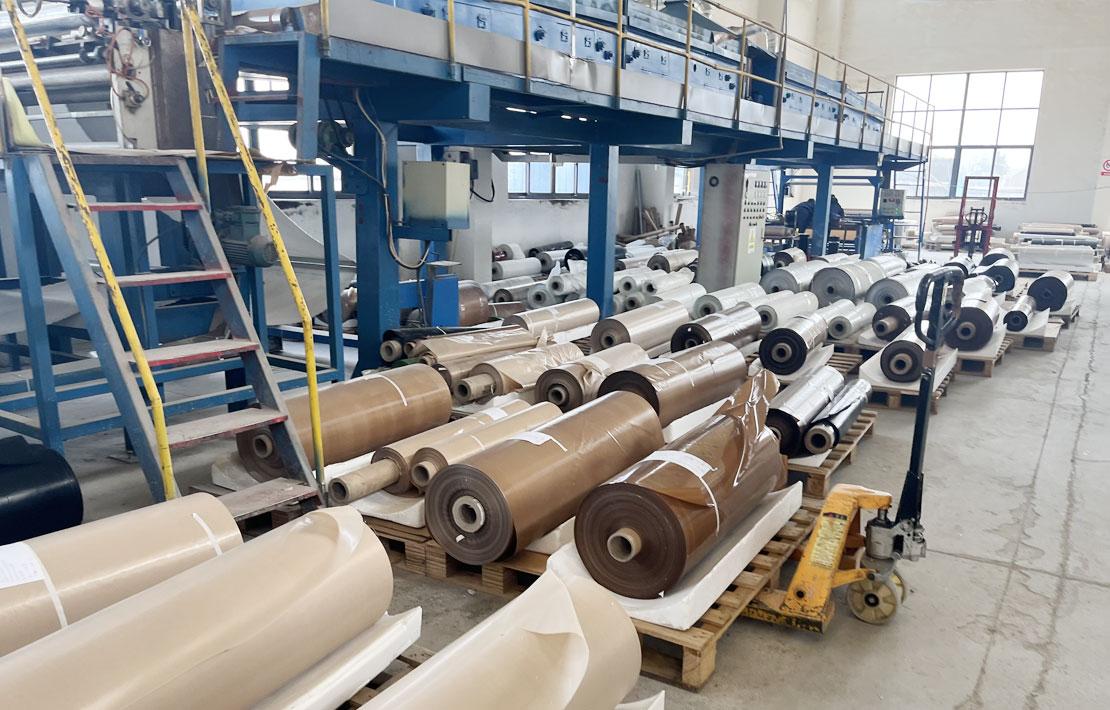 Fiberglass Cloth Weights Explained
Cloth weight is quoted in ounces per square yard (oz/yd²) or grams per square meter (GSM). To convert, multiply ounces per square yard by 33.9. Weight sets how much glass each layer adds, and therefore how quickly a laminate builds. Lighter cloth gives a smoother surface, while heavier cloth builds thickness with fewer layers.
| Weight Class | Converted Weight | Typical Use | Widths And Roll |
| 4 oz | About 136 g/m² | Surface layer, canoe building, final layers over moldless designs | 30 and 50 inch, 125 yard roll |
| 6 oz (style 3733) | About 203 g/m² by class; style 3733 is 5.79 oz/yd², about 196 g/m² | Composite parts, repairs and small craft | 38, 50 and 60 inch |
| 10 oz (style 7500) | About 339 g/m² | Boats, mold building and lay-up | 38 and 50 inch, 125 yard roll |
The 6 oz name and the 5.79 oz listing do not match, so confirm the exact GSM on the data sheet before ordering. The 3733 roll length also appears as 110 yards in one place and 125 yards in another. Across the full range, fiberglass cloth runs from 260 to 1600 g/m².
Fiberglass Cloth Weaves Explained
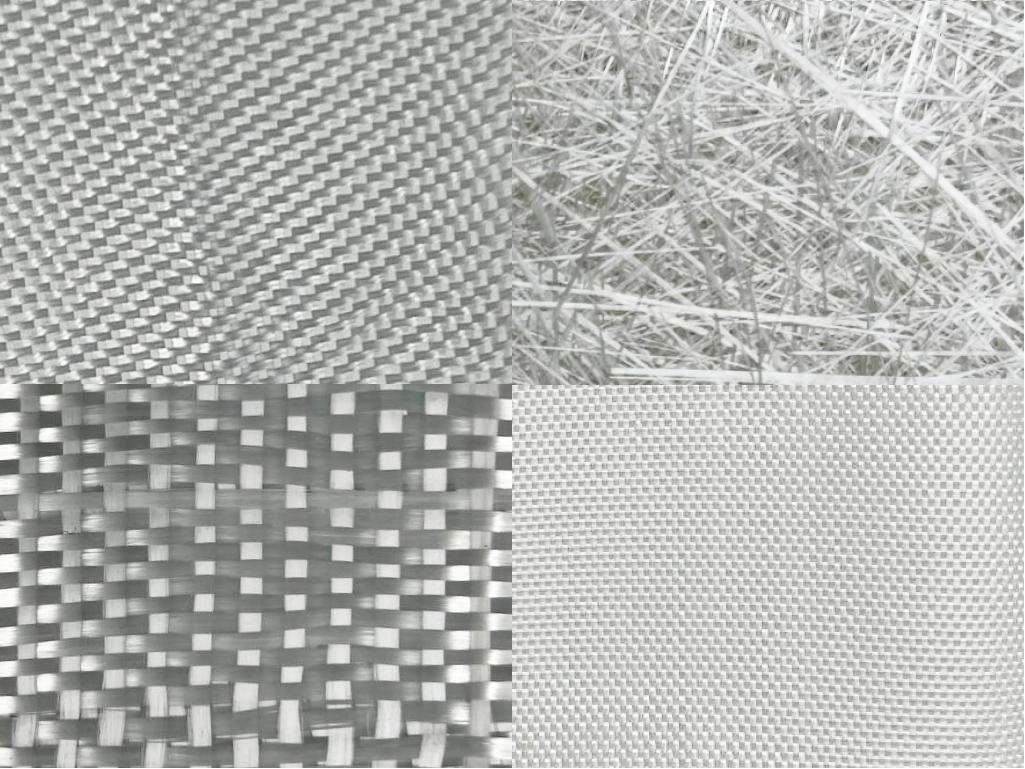 iberglass Cloth Weaves Explained
Weave controls drape, surface texture and how the cloth carries load in its two directions. The three weaves behave differently, so each is best judged on its own properties.
Plain weave crosses warp and weft at 90 degrees. That makes it stable, smooth and easy to cut, and the cut edges do not unravel readily. Its tensile strength and wear resistance are lower than the other two, so it suits large flat parts.
Twill weave passes each warp thread over two fill yarns. It balances stability and drape, and it gives good strength and durability for parts such as luggage racks and ship shells. Cut twill edges loosen more easily than plain, so handle cut edges with care.
Satin weave floats several warp threads over a single fill yarn, which gives the cloth fewer crossovers and freer bending. That is why satin conforms best to curves and complex shapes. Satin is not the strongest weave in every test. A 2023 study of woven glass fabric and epoxy laminates made by vacuum molding found that satin gave the best flexural modulus, while twill had the better storage modulus near the glass transition temperature. Choose the weave for drape and shape first, then confirm strength on a test panel in your resin.
Fiberglass Cloth Applications Explained
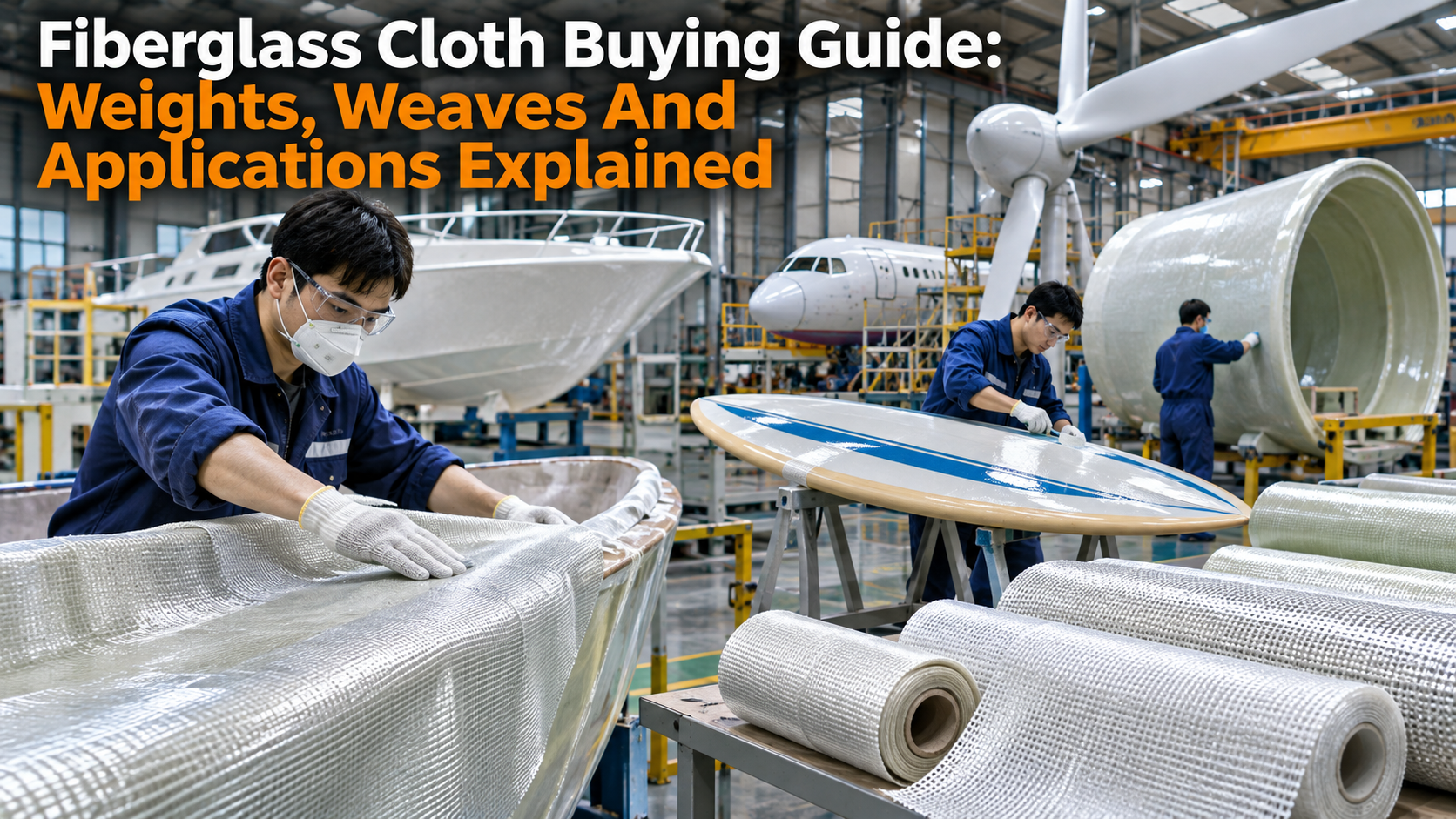 Fiberglass Cloth Applications Explained
Boats, canoes and small craft: For large smooth hull areas that need strength, the company recommends cloth paired with epoxy. A 4 oz layer works well as a surface because it wets out quickly and hides heavier fabric beneath it. The 6 oz weight suits small craft and repairs, and the 10 oz weight is used for structural layers alternated at 45 degrees. Lay-up and bonding should still be proven on a test laminate.
Surfboards: The company gives E-glass at about 120 g/m² for the core and surface, and S-glass at about 200 g/m² for edges, corners and tail wings. These are company figures, so confirm them against the board design and a sample before fixing the specification.
Molds and complex shapes: Modified style 7725, listed at 8.8 oz/yd² and 38 inches wide, is named for complicated shapes. Satin weave suits curved molds for the drape reasons above.
Aerospace, wind, shipbuilding, automotive and defense: Loads in these sectors often run in set directions. Multiaxial constructions are stitched with polyester yarn so the layers stay non-curling during lay-up. Biaxial cloth at ±45° suits shear and twisting, while unidirectional and triaxial cloth suit loads along set axes.
Printed circuit boards: E-glass is the usual base because of its heat endurance and dielectric behavior. The weave also matters. A 2014 paper presented at the IEEE International Symposium on Electromagnetic Compatibility modeled the skew that uneven dielectric properties in the glass weave cause between signal pairs, so weave uniformity is a specification item on high data-rate boards.
Specialty Grades Outside Standard Cloth
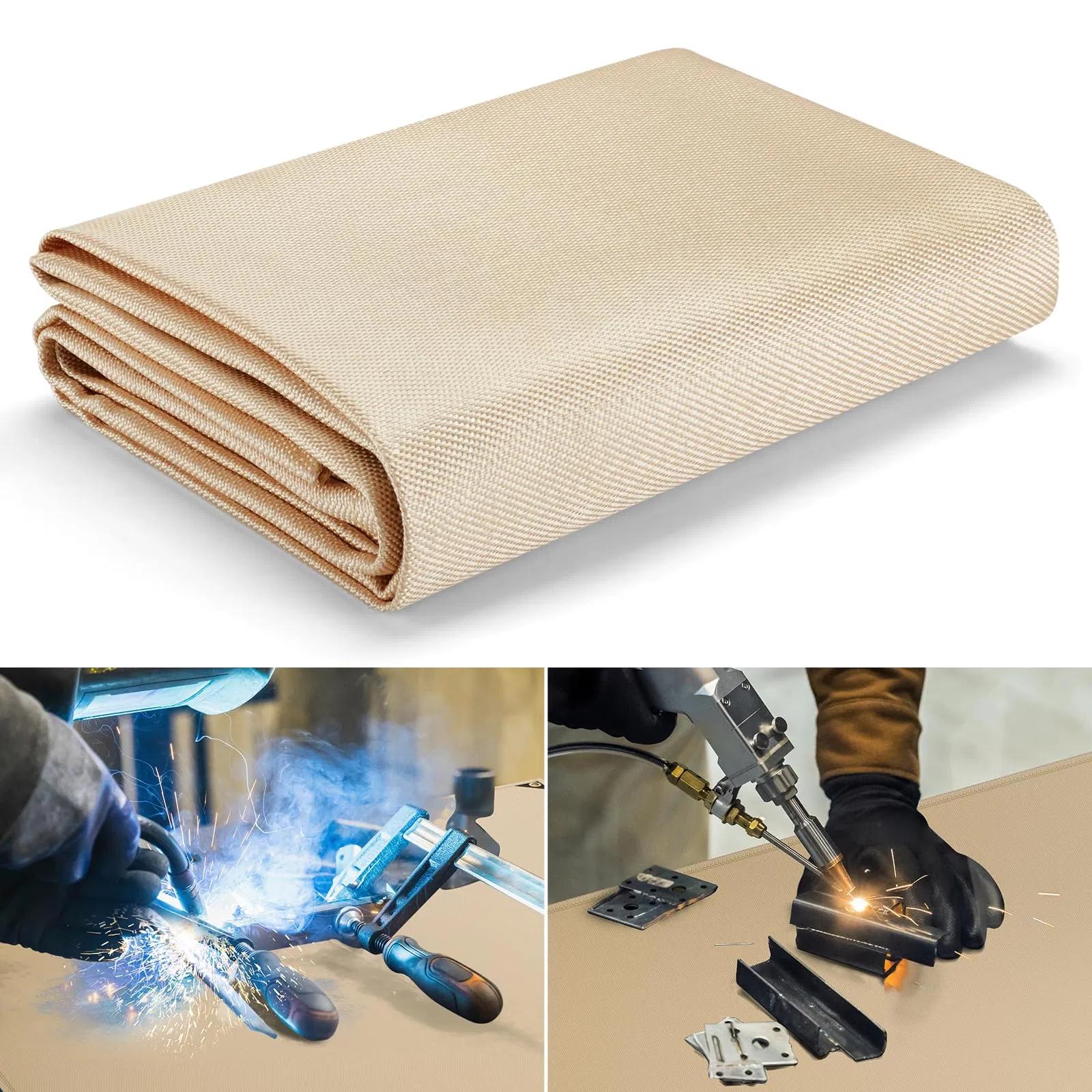 Specialty Grades Outside Standard Cloth
Pipe insulation and welding protection use coated or silica grades with their own temperature rules, so they are kept out of the standard selection here. For pipe jackets, acrylic coated cloth is the company’s listed choice, and the air pocket formed inside an installed jacket reduces heat loss from valves, flanges and steam lines. For welding blankets, the company gives working temperatures of 900°C to 982°C and instant peaks of 1450°C to 1650°C. These are company figures without a stated test basis, so confirm them before specifying. Each specialty grade should be chosen against its own data sheet.
Matching Fiberglass Cloth Styles To Projects
The table below lists the company’s standard styles with the use the company names, where one is given. Where no use is named, the suggestion follows from weight and weave and should be confirmed on a test panel.
| Style | Weight | Weave | Width And Roll | Suited To |
| 3733 (6 oz class) | 5.79 oz/yd² | Plain, 18 x 18 | 38, 50 and 60 inch, 110 yard | Composite parts, repairs and small craft (company named) |
| 4 oz class | About 136 g/m² | Not stated | 30 and 50 inch, 125 yard | Surface layers and canoe builds (company named) |
| 10 oz class (7500) | About 339 g/m² | Not stated | 38 and 50 inch, 125 yard | Boats, mold building and lay-up (company named) |
| Modified 7725 | 8.8 oz/yd² | Count 54 x 18 | 38 inch | Complicated shapes (company named) |
| 3732 | 430 g/m² | Satin | 1.0 to 2.0 m, 50 m | General composite work; confirm the weave |
| 7628 | 205 g/m² | Plain | 1.0 to 1.27 m, 100 m | Lighter builds (no use named) |
| 3784 | 880 g/m² | Satin | 1.0 to 2.0 m, 50 m | Heavier builds (no use named) |
| 3786 | 1,300 g/m² | Satin | 1.0 to 2.0 m, 50 m | Heavy builds (no use named) |
| 3788 | 1,700 g/m² | Satin | 1.0 to 2.0 m, 50 m | Heaviest standard build (no use named) |
| 666 | 660 g/m² | Satin | 1, 1.2 and 1.5 m, 50, 100 and 500 m | Mid-weight builds (no use named) |
For a small repair or a lay-up that must be easy to handle, the company’s 3733 is the named choice. For a large curved mold, satin styles such as the modified 7725 suit the drape. For thick builds with fewer layers, the heavier satin styles and the 10 oz class are the logical choice, while the 4 oz class suits surface layers.
Buying Guide: Confirming The Specification
Request the data sheet for each style before ordering. The 3732 sheet gives a weight of 430 g/m² ±10, a warp count of 18 ±1.8 per cm, a weft count of 13 ±1.3 per cm and minimum tensile strength of 700 N/5 cm in warp and 400 N/5 cm in weft. Ask for the same set for every style, along with the test conditions behind any temperature figure. Ask the quote to show both oz/yd² and GSM, so the weight on the quote can be checked against the data sheet.
ZS Fiberglass draws its glass, makes its yarn and weaves its cloth in house, so one plant controls the process from raw material to roll. Ask for batch records that trace an order back to its yarn. The company lists CE, RoHS, UL94 and NFPA 701 certificates, and each covers something different, so request the report for the exact style. The stated warranty on fiberglass materials is one year. Customization of weight, width, length and labeling is offered, but minimum order quantities for custom work are not stated.
FAQs
Why Does A Fiberglass Cloth Sample Arrive Folded?
Samples are folded during the sample stage, while production rolls are wound on a cardboard core or tube. A folded sample shows the weave and finish, but it does not show how a fiberglass fabric roll will handle, so judge handling from the roll specification and a trial cut.
Does Fiberglass Cloth Rot Or Mildew?
No. Fiberglass cloth resists rot and mildew and stays stable under wear. The finished composite also depends on the resin, so check the resin system’s own environmental limits.
How Much Resin Will A Roll Need?
The product information gives no consumption figure. Resin use depends on weight, weave, resin system and wet-out method. Weigh a sample of cloth, laminate a test panel, measure the resin used per square meter, and scale that figure to the roll area.
What Does Desizing Mean For Bonding?
Size is a coating applied to the yarn during weaving to protect it. The desizing step removes it before inspection and packing. Clean glass generally helps resin bond to the fabric, so a properly desized roll is the expected condition.