


Choosing fiberglass fabric for a composite part starts with the loads the part must carry. Once you know whether the part will mainly bend, twist, take shear or absorb impact, the reinforcement structure narrows quickly. The resin, the laying process and the part’s shape then decide whether a fabric fits. The steps below follow that order, and the buying section turns them into a purchase order.
Step 1: Classify The Reinforcement By Structure
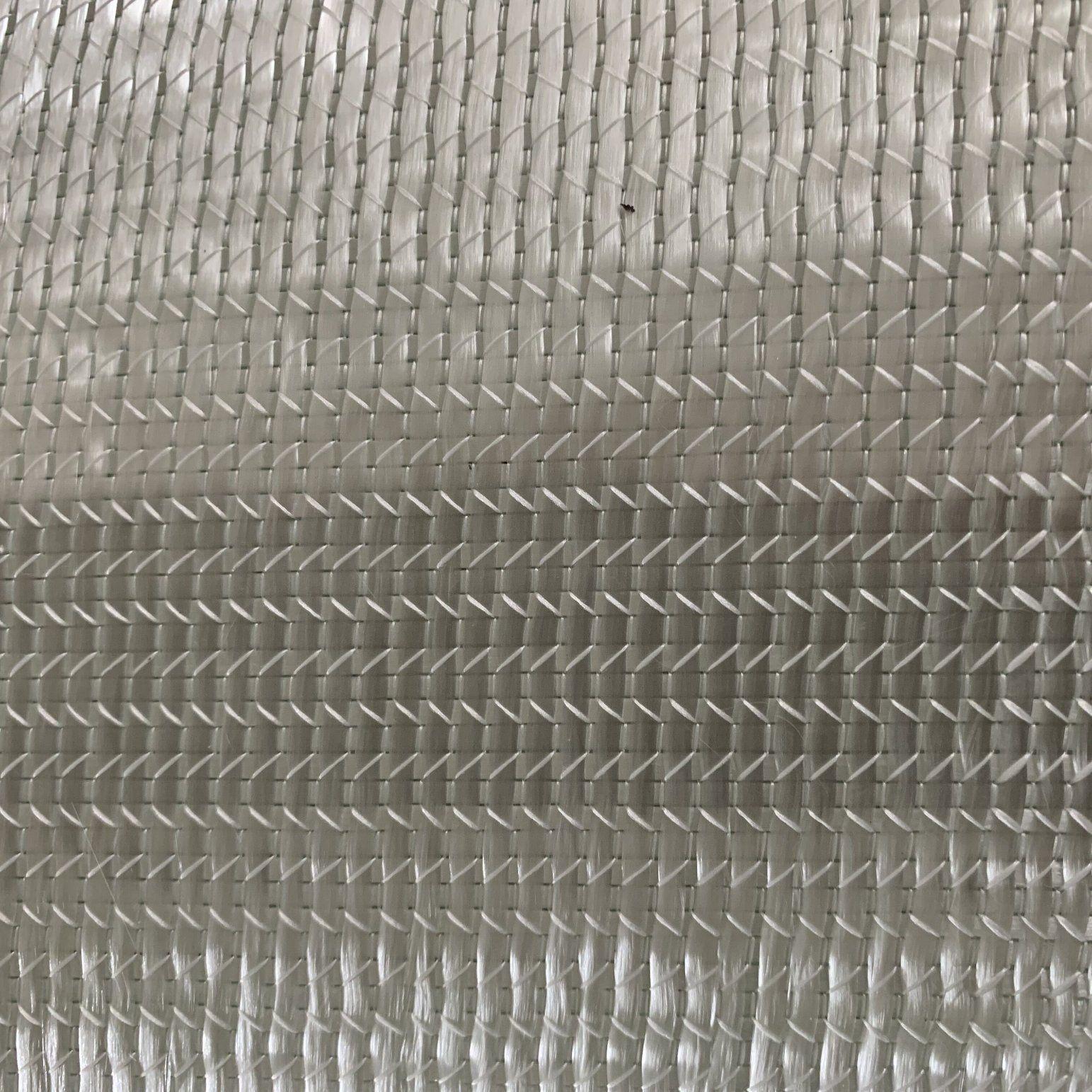 Step 1: Classify The Reinforcement By Structure
Composite fabrics fall into two families, and the difference between them drives every later choice.
Woven fabrics such as plain, twill and satin interlace warp and weft yarns. The yarns bend over and under each other, so the fabric carries load in two directions but with some fiber crimp. Plain weave is the most stable and drapes least, twill is more flexible, and satin drapes best.
Directional fabrics keep the fibers straight and stitch them into set layers. Unidirectional fabric places most of its weight in one direction, usually 0°. Biaxial fabric carries fibers at ±45°, which is the usual layout for shear and twisting. Triaxial fabric adds a third direction to the biaxial layout. Because the fibers are not crimped, load transfers more directly, but the fabric only reinforces the directions it was built for.
The choice is therefore a choice of structure first. Use woven fabric where the load is spread across both axes and the shape must drape. Use a directional fabric where the load path is known and must be matched directly.
Step 2: Map The Load Path
Where loads act along the warp and weft, woven fabric is usually sufficient. Where loads act at an angle, a directional fabric matches the load better. Biaxial cloth runs at ±45°, adjustable from +30° to +80°, with a total weight of 300 to 1200 g/m² and widths up to 101 inches. Unidirectional cloth runs from 150 to 1200 g/m² in the 0° direction with a lighter 90° component. Triaxial cloth runs from 450 to 2000 g/m².
Research supports matching the angle to the load. NREL-reported fatigue testing of laminates with 0° and ±45° layers found that fatigue resistance depended on fiber content and on the share of ±45° reinforcement, and that it fell short of expectations at high fiber contents and high ±45° shares. The angle mix is a design decision.
Step 3: Choose Weave Or Layout For The Shape
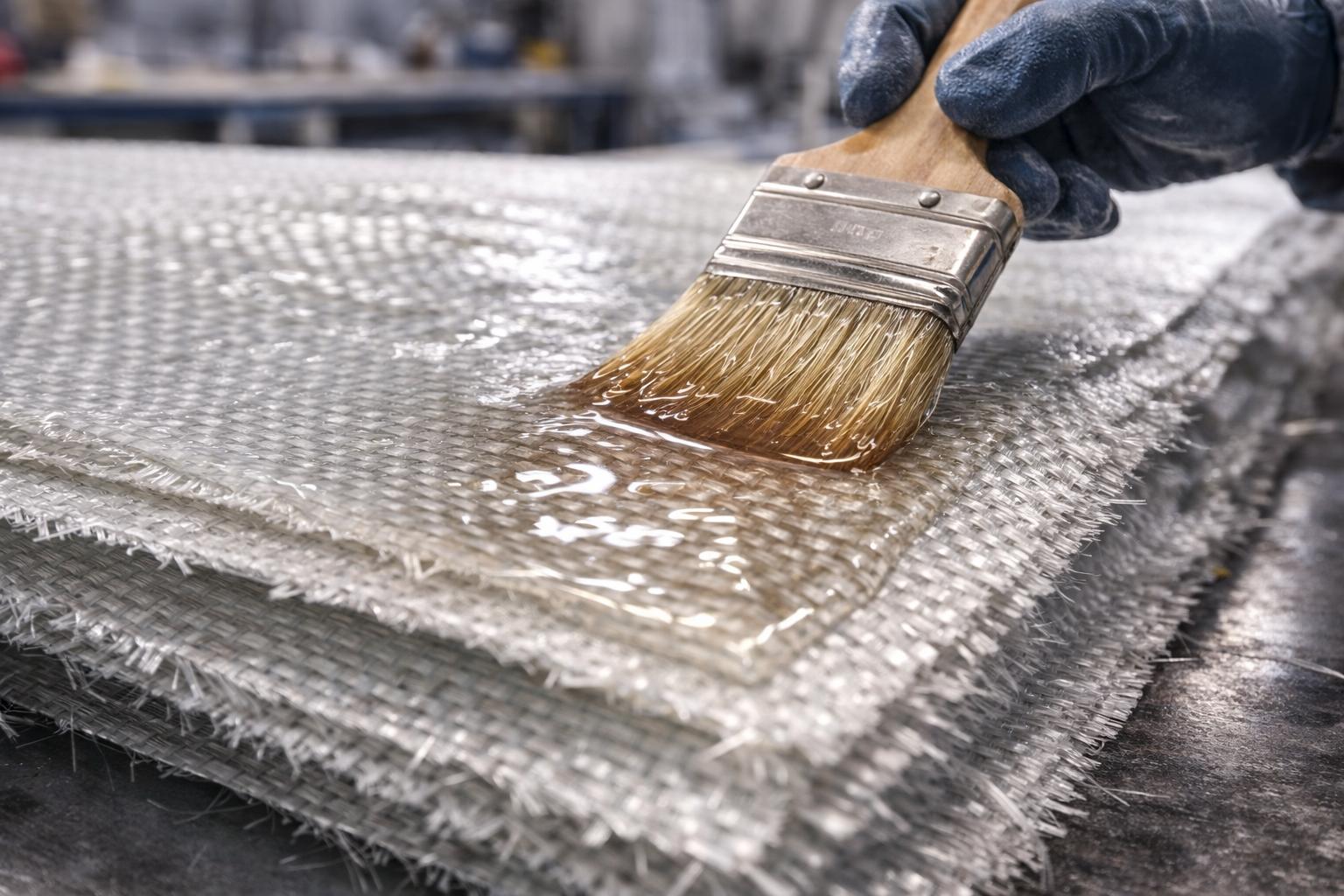 Step 3: Choose Weave Or Layout For The Shape
Within woven fabrics, satin conforms best to curved surfaces, plain suits large smooth parts, and twill adds durability for parts that must last. Weave also changes stiffness in ways that depend on the test. A 2023 study of woven glass and epoxy laminates made by vacuum molding found that satin gave the best flexural modulus, while twill had the better storage modulus near the glass transition temperature. Choose the weave for drape and shape first, then check performance on a panel made with your resin and process.
Step 4: Match The Fabric To The Resin And Process
Fiberglass fabric works with polyester, vinyl ester and epoxy resin, as long as the resin ratio is controlled before application. Hand lay-up tolerates small variations, while vacuum infusion is more sensitive, because weave and fabric weight change fiber and void volume in the finished laminate. Before ordering rolls, run a test panel in your own resin and process, and check wet-out, trapped air and cured thickness.
Step 5: Set Weight And Layer Count
Lighter fabric gives a smoother surface, and heavier fabric builds thickness and stiffness faster. The 4, 6 and 10 oz classes cover most composite work. The number of layers belongs to the laminate designer, so set the schedule first, then confirm that the chosen weight reaches the target thickness in a practical number of plies.
Step 6: Choose The Glass Type
 Step 6: Choose The Glass Type
E-glass is the standard for general composite work, with good electrical insulation and strength. S-glass is rated about 35 percent higher in strength than E-glass and suits local high-strength areas, but its test basis is not published, so request the data first. C-glass has stable chemistry and good strength, but its high alkali content rules it out for electrical insulation.
Temperature ratings are not part of the standard composite selection unless the laminate will see heat in service. Where they apply, read them with their time basis. The 3732 data sheet gives a service range of -120°C to 550°C, so ask whether 550°C is a continuous rating or a half-hour exposure before specifying a part that runs hot.
Buying Decisions For Procurement Teams
The table below links common part types to a likely reinforcement structure and the check to make before ordering.
| Part Type | Likely Construction | Check Before Ordering |
| Large smooth panel | Plain or satin woven cloth | Surface finish on a test panel |
| Curved molded part | Satin woven cloth | Drape over the mold |
| Twisting or shear-loaded part | Biaxial or multiaxial cloth | Angle, weight and layer schedule |
| Thickness build in set directions | Unidirectional or triaxial cloth | Load direction and roll width |
| Vacuum infusion part | Weight and weave chosen by infusion test | Flow and void level |
Before ordering, get the data sheet for the exact style. The 3732 sheet lists a weight of 430 g/m² ±10, a warp count of 18 ±1.8 per cm, a weft count of 13 ±1.3 per cm, and minimum tensile strength of 700 N/5 cm in warp and 400 N/5 cm in weft. Ask for the same set for every style you buy, along with the test conditions behind each figure.
ZS Fiberglass draws the glass, twists the yarn and weaves the cloth in house, so one plant controls the process from yarn to roll. Ask for batch records that trace your order back to its yarn. The company lists CE, RoHS, UL94 and NFPA 701 certificates, but each covers something different, so request the report for the exact product. Customization covers weight, width, length and labeling. The stated warranty for fiberglass materials is one year, and the lead time for raw materials is 15 days. Ask for the minimum order quantity on any custom specification, since it is not stated.
Compare cost per finished laminate, not per roll, by including resin use, layer count and finishing time.
FAQs
Is Woven Fabric Or Directional Fabric Better For A Shear-Loaded Part?
Directional fabric is usually the better match for shear. Biaxial cloth places fibers at ±45°, which lines up with the shear path, while woven fabric spreads fibers along the warp and weft and carries shear less directly.
Does Fiberglass Fabric Rot Or Mildew?
No. Fiberglass reinforcement fabric resists rot and mildew and stays stable under wear. The finished composite also depends on the resin, so check the resin system’s own environmental limits.
How Much Resin Should I Plan For?
The product information gives no consumption figure, and resin use depends on weight, weave, resin system and wet-out method. Weigh a sample of cloth, laminate a test panel, measure the resin used per square meter, and scale that figure to the roll area.
Can A Fabric Be Substituted For Another Without Retesting?
Not safely. Changing the weave, weight or structure changes stiffness, wet-out and fiber volume, so the laminate should be retested with the new fabric before production.


