


A fiberglass cloth tape reinforces a joint, bridges a crack, holds a waterproof coating together or wraps a pipe. Several different products sit under that label, and they are not interchangeable. Fiberglass mesh tape is an open, self-adhesive reinforcement for joints and cracks. Woven fiberglass cloth tape is a slit strip of glass fabric. Coated cloth, such as acrylic or aluminized cloth, is chosen for thermal and surface duties. This guide separates these products by structure, matches each one to its application, and sets out the specification and supplier checks for each.
Product Types And How They Differ
Fiberglass mesh tape is an open mesh with a pre-applied adhesive. Its open weave lets joint compound pass through and bond, so the tape stays in place without a separate bedding layer. It is used for joints, cracks and seams where the reinforcement sits under a coating or compound.
Woven cloth tape is cut from fiberglass cloth, so it has a closed weave with yarns running in warp and weft. It carries tension in the direction of the strip and suits reinforcement where the load is along a line.
Coated cloth is fiberglass fabric with a surface layer. Acrylic coated cloth is heat resistant and cuts easily, and it suits expansion joints and insulation jackets on pipes. Aluminized cloth reflects heat from its coated side while the base cloth provides insulation. These are thermal and surface products, not joint reinforcements, so they should be specified by temperature and coating rather than by mesh count.
High-silica cloth is a separate product for extreme heat. It is chosen when the operating temperature exceeds what standard cloth can take, and it is not a reinforcement tape.
Matching Each Product To Its Application
 Matching Each Product To Its Application
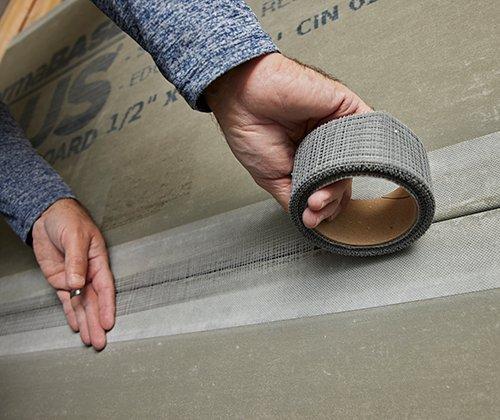
Cement board joints use mesh tape. The 2-inch width is recommended because it gives a smooth area for mortar and mastic, and the tape will not shrink with the weather. Choose the mesh weight by the joint: 65 g/m² is the most common, and heavier tape adds density and durability for larger repairs.
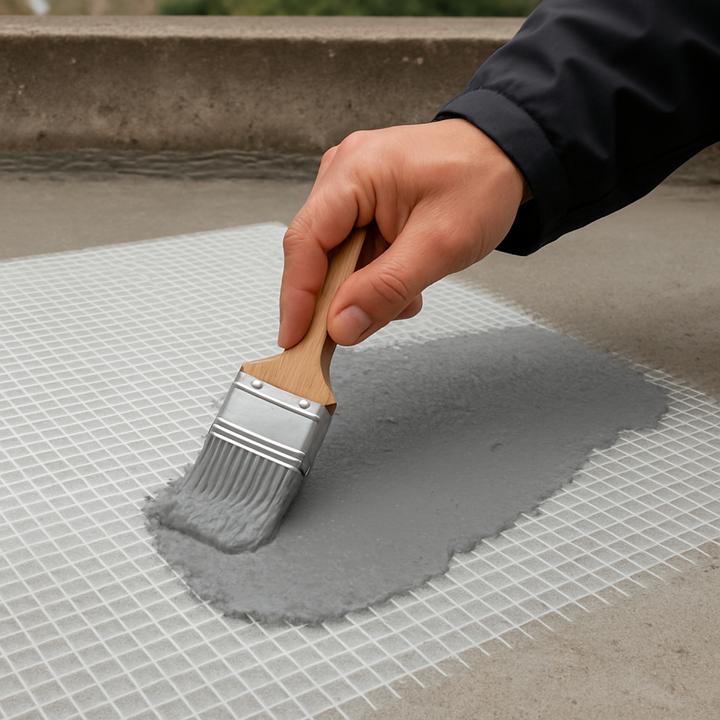
Waterproof and crack-bridging layers use mesh tape as well, bonded to the membrane. The width must cover the crack with margin, and the tape must be compatible with asphalt, polyurethane or acrylic systems. The membrane and tape should be tested together, since the performance change depends on the reinforcing material.
Pipe insulation and expansion joints use coated cloth, not mesh tape. Acrylic coated cloth is specified for these jobs, and its temperature limit depends on the coating, so confirm the coating’s rating rather than the base cloth’s.
Heat reflection uses aluminized cloth, with the coated side facing the heat source. Its selection depends on the reflective side’s orientation and the temperature the base cloth must withstand.
High temperatures use high-silica cloth, but only where standard cloth is not enough. The regular cloth rating is 550°C for half an hour, medium silica is 800°C for 20 minutes, and high silica is 1200°C for 20 minutes. These are different time bases, so confirm whether the duty is continuous or a short exposure before choosing a grade.
Benefits And Limits Of Fiberglass Mesh Tape
 Benefits And Limits Of Fiberglass Mesh Tape
Mesh tape is alkali resistant, so it holds up in cement and mortar. It resists moisture and mold, it stays dimensionally stable and it conforms to surface contours. It is lightweight and easy to cut on site.
Its limits matter as much as its benefits. The product information gives no temperature rating for the mesh tape, so it should not be specified for heat exposure. Its strength also depends on width and weight, so a wider or heavier tape is not automatically the answer to a larger load.
Specifications To Confirm Before Ordering
 Specifications To Confirm Before Ordering
The table links each product to the specification that matters for it.
| Product | Application | Specification To Confirm |
| Fiberglass mesh tape | Cement board joints | Width, usually 2 inch, and grid |
| Fiberglass mesh tape | Waterproof or crack-bridging layers | Width with margin, and membrane compatibility |
| Fiberglass mesh tape | General joint reinforcement | Weight of 65, 75 or 90 g/m², and grid |
| Acrylic coated cloth | Pipe insulation and expansion joints | Coating type and its temperature rating |
| Aluminized cloth | Heat reflection | Coated side facing the heat source, and base temperature |
| High-silica cloth | Extreme heat | Temperature grade and time basis |
For any reinforcement tape, choose a width larger than the area you need to cover, with a clear margin on each side.
Supplier Selection: What To Check
ZS Fiberglass makes its own yarn, weaves its own mesh and cuts the product to the width you need. Ask for batch records that trace your order back to its yarn, since consistency decides whether one order matches the last.
Certificates vary by product page. The mesh tape page lists CE, ISO and BSCI, while the company overview lists CE, UL, TUV, ISO9001, RoHS, BSI and EN 13501. Ask for the report for the exact product you will buy, not a general company certificate. Custom widths, weights and colors are available, but custom work often carries a minimum order quantity, so confirm it in writing before committing.
The company gives a one-year warranty on fiberglass materials and quotes 15 days for raw material lead time. For new customers, the stated payment terms are 30 percent deposit and 70 percent before loading. Confirm these on your own quotation.
FAQs
Does Tape Color Change How It Performs?
No. Color does not affect performance. White is the most popular choice and the sensible default. Gray is available for cement board, green for mold-resistant applications and yellow for thin mesh. Custom colors need to meet the minimum order quantity.
Can I Use Fiberglass Cloth Tape Outdoors?
Cement board applications are described as weather resistant, and the fiberglass base resists moisture and mold. The membrane or coating over the tape often decides outdoor performance, so check the complete system.
How Quickly Can I Get A Sample?
Free samples are quoted at about three days, and A4 samples are offered free of charge with shipping to most destinations. Request the width and weight you plan to order, so the sample tests the product you will buy.


