


A fiberglass mat is a non-woven sheet of glass fibers, and the right one depends on the job it must do. Some mats add structure to a laminate, some give a smooth finish or a corrosion barrier, and some insulate or absorb sound. Choosing by function first avoids the most common mistake, which is putting an insulation product into a structural layer or a surface product where it must carry load. This guide groups the types by function, links each one to its applications, and sets out the decisions to make before ordering.
Fiberglass Mat Types By Function
 Fiberglass Mat Types By Function
Three functions cover the range.
- Reinforcement adds bulk, stiffness and strength to a laminate.
- Surface gives a smooth finish and protection against corrosion.
- Insulation slows heat transfer and absorbs sound.
| Type | Function | Structure | Typical Applications |
| Fiberglass Chopped Strand Mat | Reinforcement | Chopped strands bonded with powder or emulsion binder | Hand lay-up and molding of boats, pipes, tanks, car parts and building panels |
| Continuous filament mat | Reinforcement | Non-woven continuous filament yarns with an insoluble binder | Resin transfer and vacuum molding, automotive roof interiors, transformer insulation materials |
| Stitched mat | Reinforcement | Binder-free, stitched with polyester thread | Vacuum infusion, resin transfer molding, epoxy laminates such as boat repairs and wind blade work |
| Combo mat | Reinforcement | Mat stitched to woven roving or biaxial fabric | Thick structural layers laid in one pass, such as marine hulls, wind components and truck bodies |
| Fiberglass surfacing tissue | Surface | Ultra-thin non-woven veil | Class-A finishes, corrosion barriers on pipes and tanks, outer layers of pultruded profiles |
| Fiberglass Needle Mat | Insulation | Binder-free needled fibers in a 3D structure | Pipe and valve insulation, exhaust and generator noise control, high-temperature insulation |
Reinforcement Mats: Where Each One Fits
 Reinforcement Mats: Where Each One Fits
Reinforcement is the largest group of fiberglass mat products, and each member suits a different process.
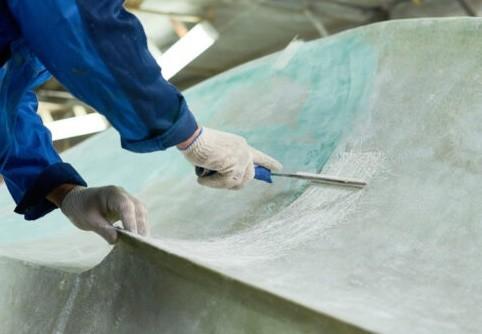
Chopped strand mat is the workhorse of hand lay-up. Its random orientation drapes over bow curves and spreads impact in all directions, which is why it is used for hulls. Repairs use it too, since small pieces fill a tapered grind-out and bond to the existing laminate without the hard edges that woven cloth leaves. Research supports blending it with woven fabric. A study in the Journal of Mechanical Engineering and Technology found that adding chopped strand mat significantly improved the flexural properties of glass laminates that already contained woven roving.
Continuous filament mat suits closed-mold processes. Its continuous filaments and insoluble binder make it compatible with unsaturated polyester, epoxy and polyamine resins, and it is used in resin transfer molding and vacuum molding.
Stitched mat has no binder, so the resin contacts the glass directly. That makes it the usual choice for infusion and for epoxy, where a standard binder may not dissolve. Its open structure lets resin flow through, which suits closed molds.
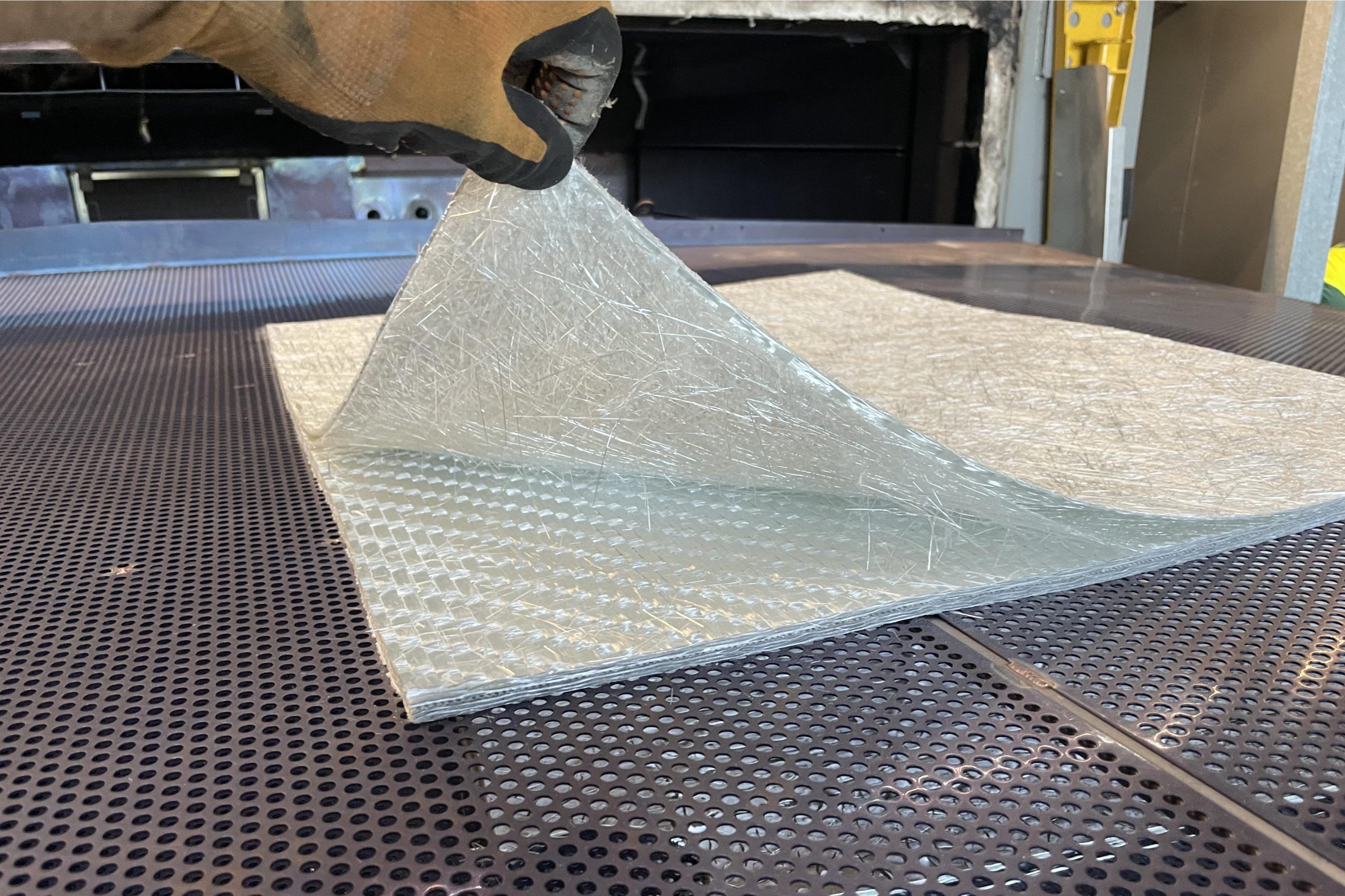
Combo mat joins a mat layer and a woven or biaxial layer in one stitched product, so one pass does the work of two. A 2023 review in the International Journal of Naval Architecture and Ocean Engineering compared hull laminates built with chopped strand mat alone and with chopped strand and woven roving, and found that the fabric combination affects laminate properties. The combo choice should therefore be checked against the design.
Surface And Insulation Mats: Different Jobs
Surfacing tissue is not a reinforcement, and it should not be counted in a laminate’s structural layers. Its role is a smooth, resin-rich surface that hides the texture of coarser fibers beneath and forms a corrosion barrier. It suits Class-A finishes on yachts and automotive panels, the inner liner of FRP pipes and tanks, and the outer layer of pultruded profiles.
Needle mat is an insulation product and does not belong in a laminate. Its binder-free structure traps air, which slows heat transfer, and its porous network absorbs sound. The fiber choice ranges from E-glass for general insulation to ECR-glass for acidic conditions and high-silica for the highest temperatures. Pick the fiber by operating temperature and chemical exposure together, not by the highest rating alone.
How To Select The Right Fiberglass Mat
 How To Select The Right Fiberglass Mat
- Start with the function. Decide whether the mat must reinforce, finish or insulate. Reinforcements are chosen on laminate performance, surface mats on finish quality, and insulation mats on temperature and sound.
- Match the binder and resin. Standard mat binders are designed to dissolve in polyester and vinyl ester resin. Epoxy needs an epoxy-compatible mat or a binder-free stitched mat, and infusion or resin transfer molding works best with stitched or continuous filament mat.
- Set the weight for the job. Chopped strand mat is listed from 225 to 600 g/m². Lower weights wet out faster and drape more easily, while higher weights build thickness faster. Lighter grades penetrate better but cover less of the layer beneath.
- Choose the binder for the shape. Emulsion-bound mat is smoother and sheds fewer strands, which suits large parts with few contours. Powder-bound mat sheds more when cut but handles complex molds well.
- Confirm width and format. Standard chopped strand mat widths are 1040, 1250 and 1270 mm, and custom widths are available.
Buying Decisions For Procurement Teams
 Buying Decisions For Procurement Teams
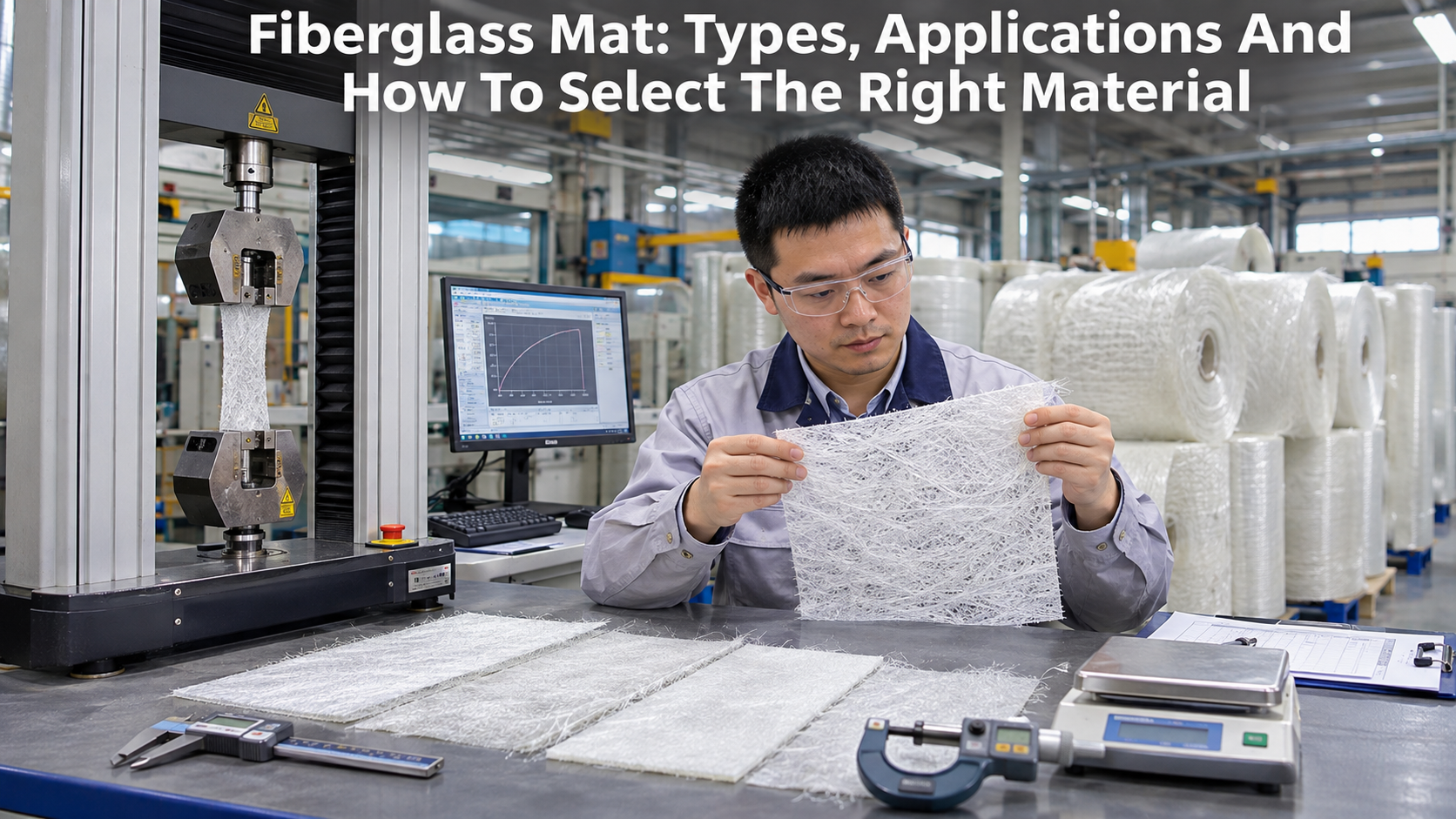
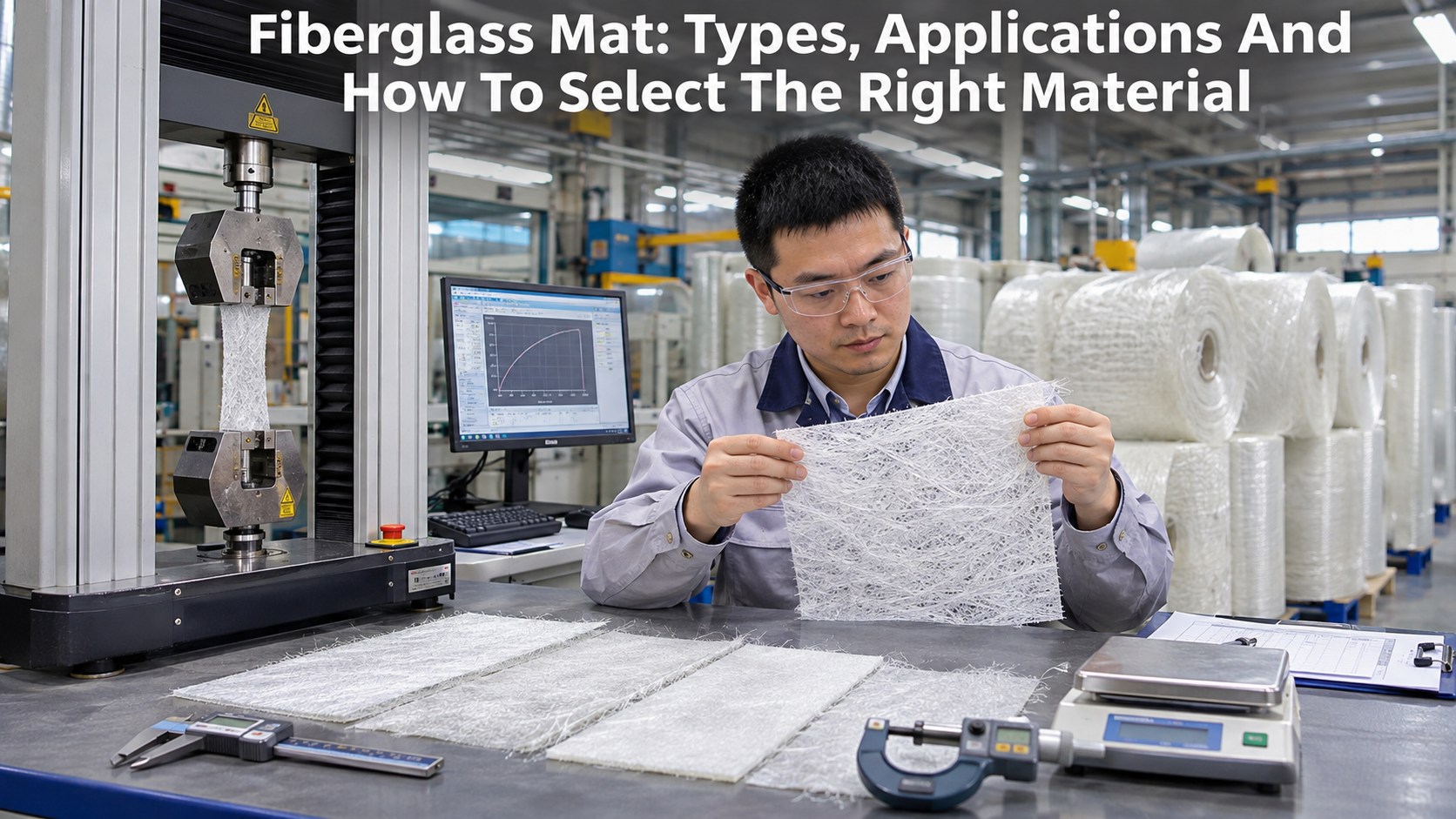
Request a technical data sheet for the exact product. A useful sheet lists mass per unit area with its tolerance, combustible content, water content, tensile strength in both directions and resin infiltration time, and it shows a standard value beside a test average for each. Check the mass label against the standard value, because one sample data sheet pairs a 450 g/m² name with a 300 g/m² standard.
ZS Fiberglass holds CCS verification and can supply a certificate of works from CCS, which gives third-party evidence of production capability. Ask for the report for the exact product as well. Customization covers weight, length, width, coating and packaging, and the warranty on raw materials is one year.
FAQs
How Long Does A Sample Take?
Free samples are available, with delivery quoted at about three days. Request the weight and width you plan to order, so the sample tests the product you will buy.
Is Fiberglass Mat Easy To Cut And Handle?
Yes. A glass fiber mat can be cut, unfolded and laid out by trained laminators and first-time users alike. Powder-bound mat sheds more when cut, so wear a dust mask and extract dust from the workspace.
Can Surfacing Tissue Be Used On Its Own?
No. It is ultra-thin and adds no structural strength, so it must sit over a reinforcement layer that carries the load.
Does A Higher Temperature Rating Make A Needle Mat Better?
Not automatically. The rating must match the operating temperature, and the chemical environment may call for a different fiber, such as ECR-glass, even when the temperature is lower. Choose the fiber for both conditions.


