


A lipo battery safe bag is a protective bag for LiPo packs while they charge, sit in storage or travel. Some buyers call it a fireproof battery pouch, but the name matters less than the model, the layer build and the evidence behind its fire protection claims. This guide follows the order a buyer decides in: pick the type, fix the configuration, ask for the right evidence, then set the bulk terms and the acceptance checks.
Choosing The Type: RC, E-Bike, Charging And Newest-Version Bags
 Choosing The Type: RC, E-Bike, Charging And Newest-Version Bags
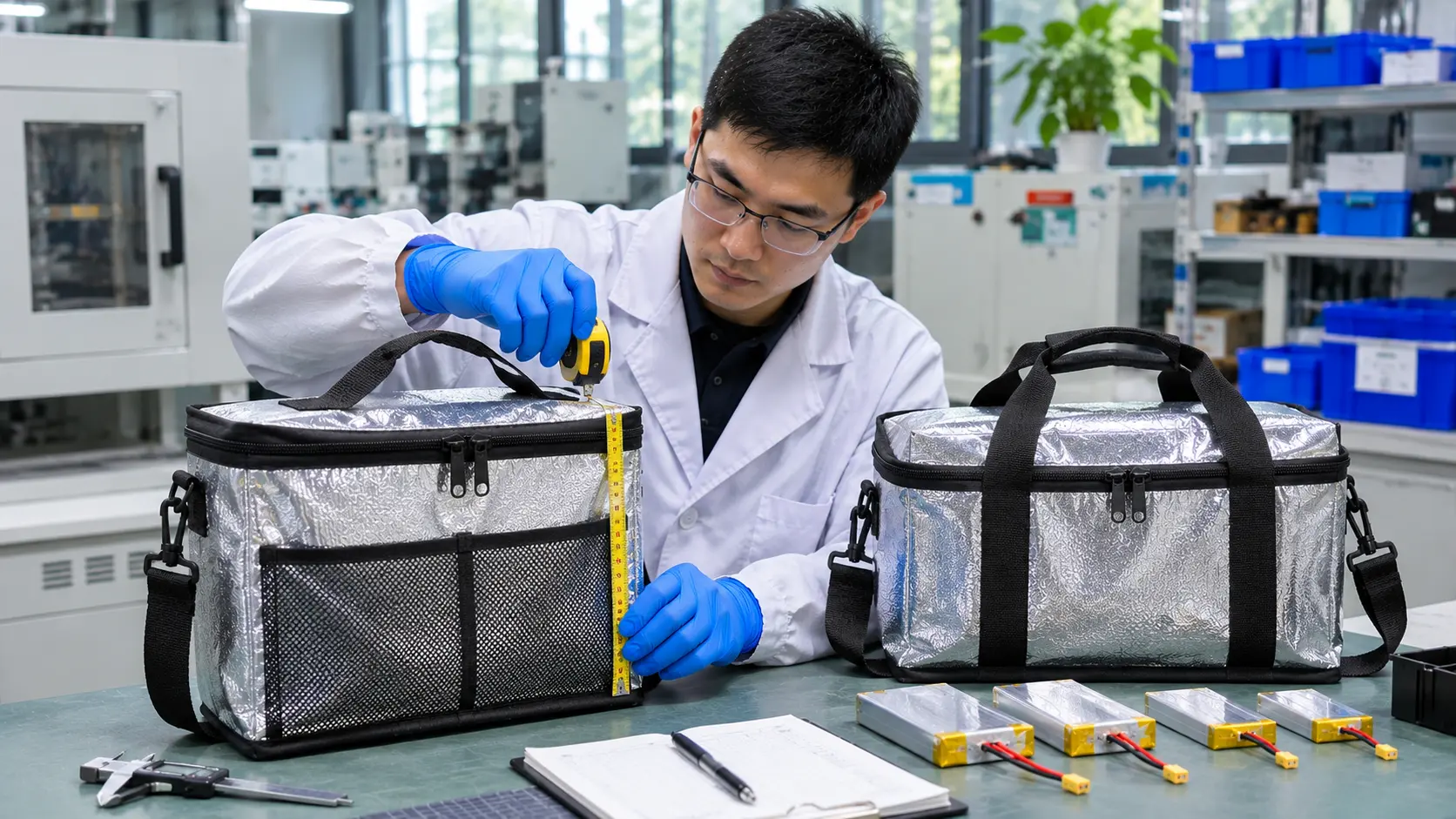
Lipo safe bags are listed as different models, and the differences sit in the carrying parts, the capacity and the layer build.
| Type | Built For | Features Published | Temperature Figure | Not Published |
| RC bag | Packs carried to RC events | Reflective handle, adjustable shoulder strap, mesh pockets, about 30 pieces of 2200mAh packs in the large bag | Not stated for this type | Layer count and size per model |
| E-bike bag | E-bike, toy and drone batteries | Dual handles, larger capacity | Up to 1800°F | Capacity as a number, handle rating |
| Charging bag | Charging at a station or bench | Side-panel port that passes the charging line through, with a cover | Not stated for this type | Cover seal performance |
| Newest version | Buyers who want the heaviest build | More layers of fire-resistant material, robust branded zipper | Up to 4200°F | Layer count, thickness |
All types share fire-resistant thread, a zippered closure and an easy-clean surface. Listed sizes run from 27 x 23 x 16 cm to 49 x 14 x 17.8 cm, and custom sizes are possible.
The choice between RC and e-bike versions of a lipo battery safe bag comes down to the pack. An RC battery safety bag is built around carrying many small packs, while the e-bike bag is listed for larger batteries, so a lipo safe bag sized for RC packs is not automatically suited to an e-bike battery. The two temperature figures belong to different versions and test bases, so they do not rank the bags against each other.
How Materials And Layers Change What You Order
 How Materials And Layers Change What You Order
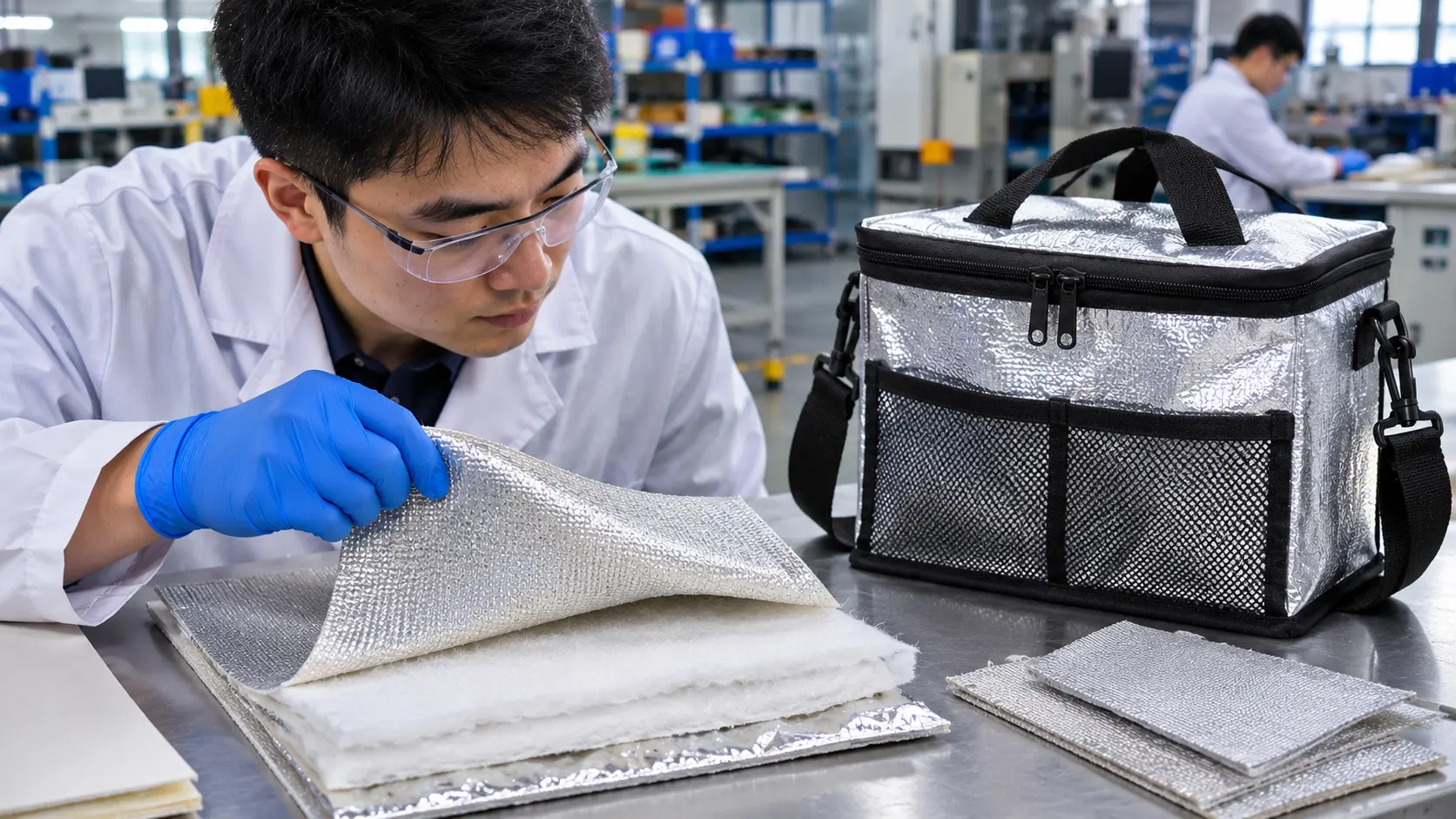
Every lipo battery safe bag starts from a three-layer construction: silicone-coated fiberglass fabric, heat insulation cotton and aluminum foil. The fabric forms the fire-retardant outer layer with water resistance from the silicone, the cotton slows heat moving through the wall, and the foil adds thermal protection. Models are not identical. Some use silicone-coated glass fiber cloth with fiberglass fabric, while another adds aluminum foil glass fiber cloth and heat insulation cotton, and the newest version carries more layers still.
That makes layer count a configuration item, not a detail. More layers can add protection but also bulk, and neither the layer order nor the thickness is published. Write the layer count and structure of the exact model into the order, and ask for a cut-away section of a production unit so the layers can be seen.
Fire Protection: What To Ask For
 Fire Protection: What To Ask For
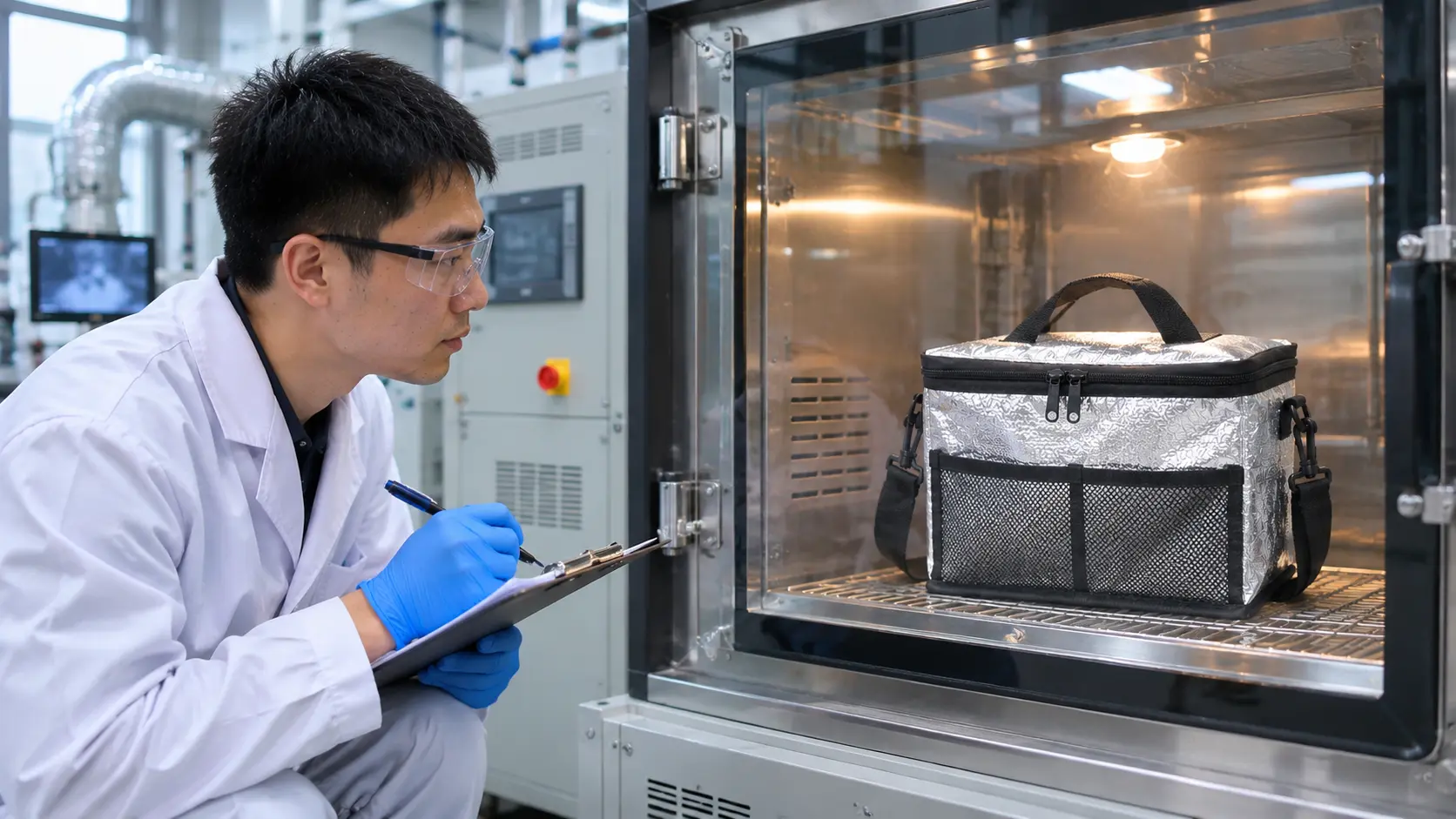
On a lipo battery safe bag, a temperature figure describes what the materials survive. It does not show whether the bag contains a battery thermal event, which is the real question in lithium polymer battery protection. Ask for the test method, how the battery event was triggered, the duration, and whether the result belongs to the raw material or the finished bag.
ANSI/CAN/UL 5800 is a safety standard for battery fire containment products, written with in-flight use in mind. It treats containment as a tested property, so ask whether a bag has a report to it or an equivalent method, and what that report covers.
Listed certificates are CE, UL94, REACH, RoHS and EN 13501. CE is a manufacturer declaration, UL94 classifies the flammability of plastic materials, REACH and RoHS concern chemical content, and EN 13501-1 classifies the reaction to fire of construction products. None of them tests a bag around a failing battery, and a laboratory, not the buyer, should run any live-battery test.
Selection Sequence For A Lipo Battery Safe Bag
 Fire Protection: What To Ask For
Each step removes models from the next, and an earlier failure is not rescued by a later strength.
- Pack and use. Name the battery and the use, which gives the type from the table.
- Fit. Compare the largest pack with the interior dimensions, which may differ from the listed outer size, and leave room for the zipper to close.
- Required feature. A charging bag needs the port, an event bag needs strap and pockets, and an e-bike bag needs the dual handles.
- Evidence. A containment report for the exact model outranks a temperature figure, and a figure with a test method outranks one without.
- Build and hardware. Layer count, zipper brand and thread decide between bags that pass steps 1 to 4.
Worked example 1: a team with 40 packs of 2200mAh. The large bag holds about 30, so 40 packs need two bags with about 20 in each. An RC bag with strap and pockets is chosen. The trade-off is carrying two bags, accepted because each stays below its stated capacity.
Worked example 2: a workshop charging daily. The charging bag with a port is chosen. The trade-off is that the port cover is the part used most, so its seal around the actual cable is checked before layers are compared.
Bulk Purchasing Requirements And Verifying Performance
| Item | Published | Confirm In Writing |
| Minimum order quantity | Not published for these bags | Minimum per model and for custom builds |
| Customization | Logo, hardware, color, size, materials | Artwork, hardware list, dimensions |
| Sample | Free, delivered in 5 days | An approved sample kept as the reference |
| Lead time | 10 days for household products | Lead time for custom builds, which is not stated |
| Inspection | 100% inspection plus semi-finished inspection | Which items are checked |
| Warranty and payment | 3 years, 30% deposit and 70% before loading for new customers | What the warranty covers |
| Certificates | CE, UL94, REACH, RoHS, EN 13501 | Report for the exact model |
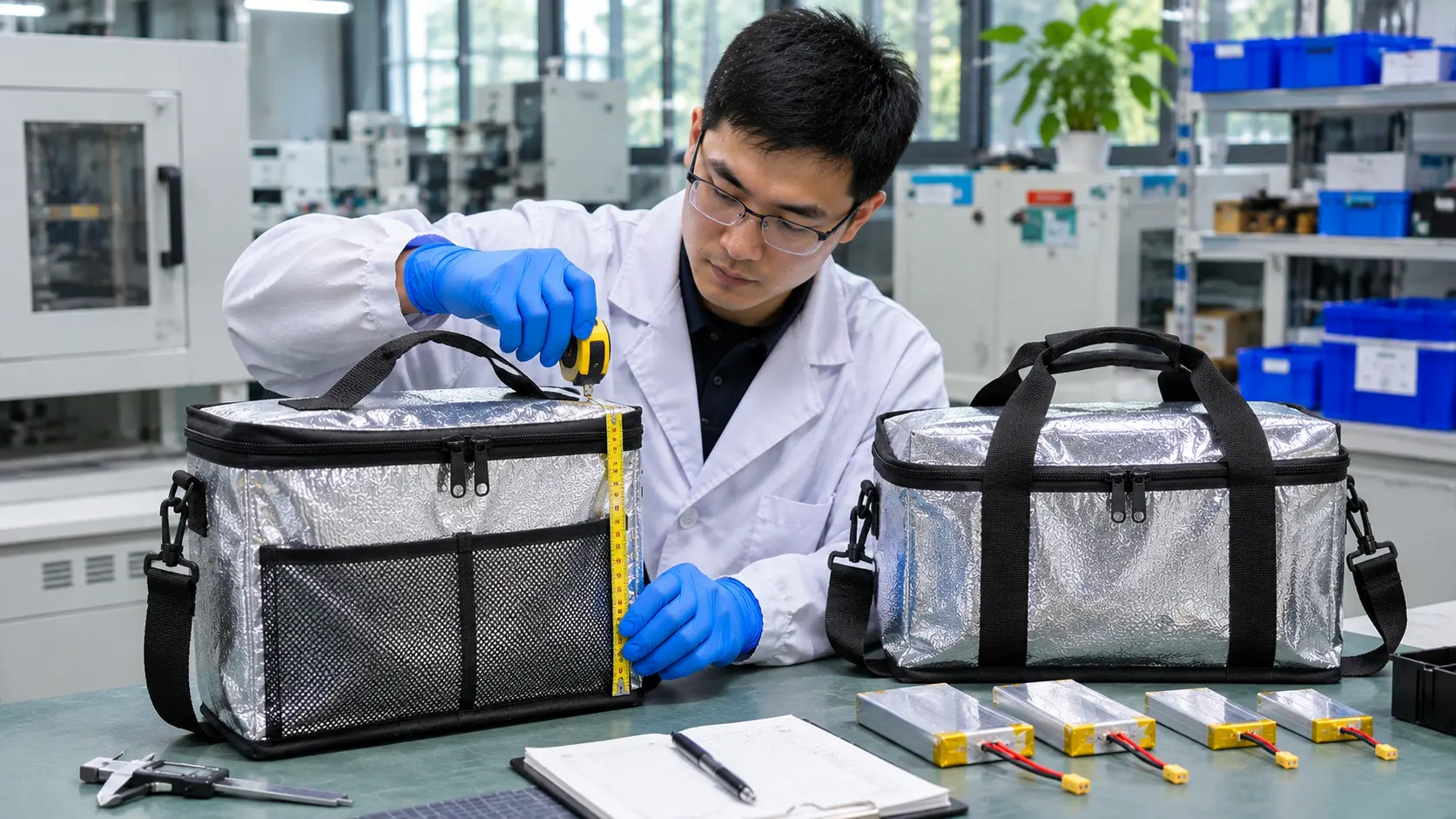
Before ordering a lipo battery safe bag in bulk, verify performance by checking the sample and the first production units after it. Measure the sample’s interior and load it with your own packs, close the zipper fully, pass your own cable through the port and close the cover, carry the loaded bag by the handle and strap, and check seams and pockets. Then compare production units with the approved sample, and ask for a cut-away section to confirm the layers. ZS Fiberglass delivers free samples in 5 days, and custom fiberglass manufacturing covers sizes and materials outside the listed models. Put the model, layer count, temperature figure with its test method and the report reference into the purchase order.
FAQs
1.Is A Bag Enough Protection On Its Own?
No. It is an added layer, so supervise charging, keep packs in good condition and follow the battery maker’s guidance.
2.What Should I Do With A Bag After A Battery Event?
Replace it instead of reusing it, because heat and flames can damage seams, coatings and the zipper in ways that are hard to see. This is general safety practice, not a published product rule.
3.Can I Take A Bag On A Flight?
A bag does not replace carrier or regulator rules for lithium batteries, so check the airline’s requirements first.
4.How Should I Clean The Bag?
The surface is described as easy to clean, but the cleaning method is not published. Ask the supplier before using solvents, and keep the zipper and port cover free of debris.
What Does 100% Inspection Cover?
It means every piece is checked, in addition to the semi-finished product check. It is a quality check, not a containment test, so ask which items are inspected.


